How octopus DNA is folded may help explain their complex brains, Vienna study suggests
A University of Vienna team mapped how DNA is folded in octopus, squid and cuttlefish. An ancient genome reshuffle created new contacts between genes that may have helped their nervous systems evolve.
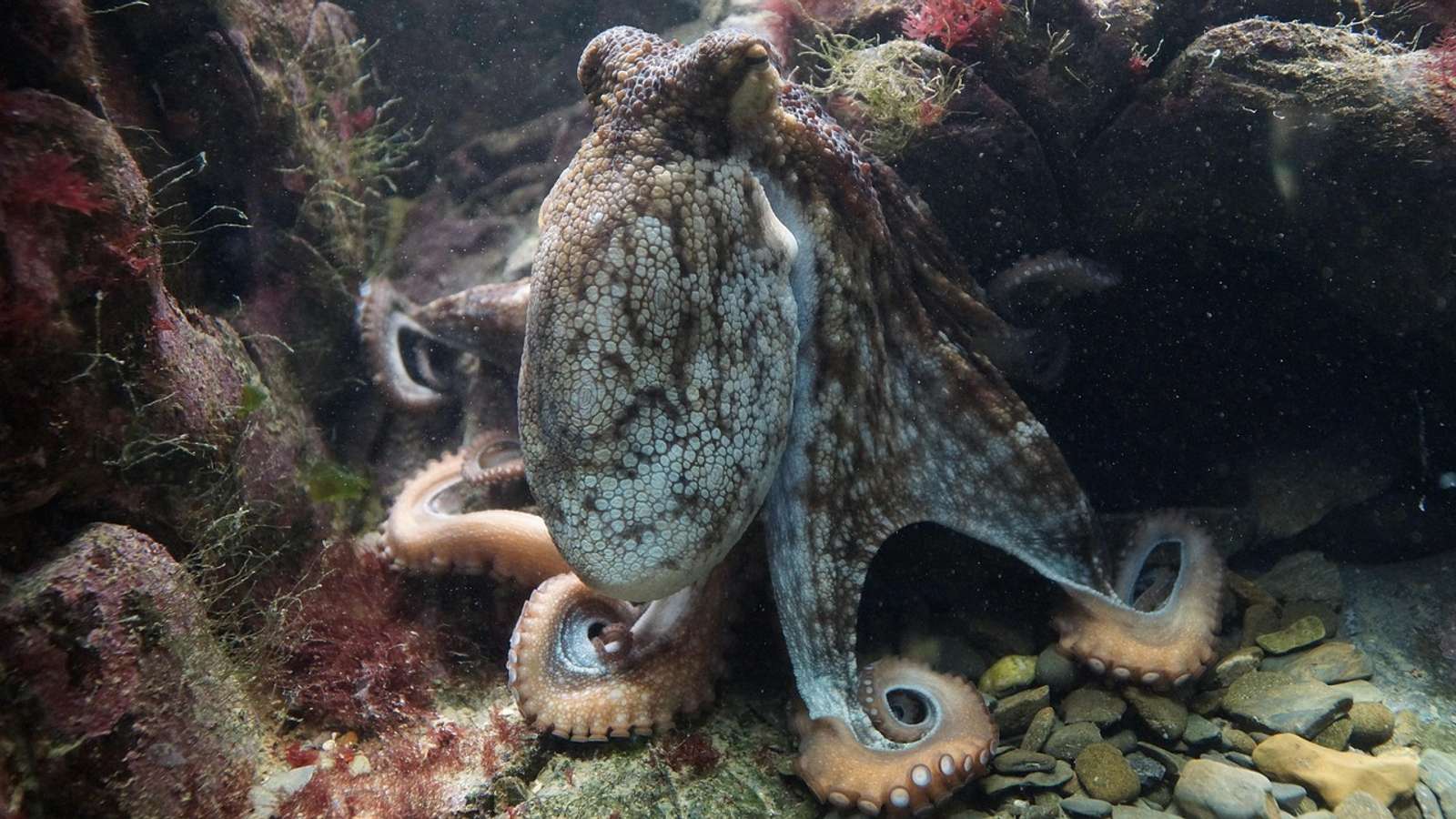
The way DNA is folded inside the cells of octopuses, squid and cuttlefish may help explain how these animals evolved their exceptionally large and elaborate nervous systems, the University of Vienna said on 9 October. The study, led by Thea Rogers with senior author Oleg Simakov, appeared in Nature Communications.
These animals, known as coleoid cephalopods, are capable of problem-solving and rapid camouflage. The researchers did not look only at which genes they have, but at how their genome is arranged in three dimensions.
An ancient reshuffle brought distant genes together
Hundreds of millions of years ago, the cephalopod genome went through a large-scale reorganization. Chromosomes broke apart and fused, and DNA regions that had been far apart ended up close together inside the cell nucleus. Those new neighbors can influence each other's activity, a process the team calls "regulatory entanglement."
“The genome isn't just a sequence of genes. It's folded into a complex three-dimensional structure.” — Dr Thea Rogers, lead author, University of Vienna
According to the preprint of the study, the team combined three lab techniques that map DNA contacts, gene activity and open regions of DNA across the squid Euprymna scolopes, the cuttlefish Sepia officinalis and the California two-spot octopus, at several developmental stages and in different tissues. The fusions were especially pronounced in the octopus lineage, while squid and cuttlefish genomes grew to more than 5 billion base pairs, compared with about 2.7 billion in some octopuses.
Large structures stayed stable while fine loops kept changing
The big structural units of the genome, called chromatin domains, stayed largely the same over evolutionary time. Finer connections called chromatin loops, which bring distant stretches of DNA into contact, varied widely between species, tissues and stages. Only three loops were shared by all three species, the preprint reports. Many of the variable loops sit near genes involved in typical cephalopod traits, including genes linked to the nervous system.
To check that such long-range contacts matter, the team used CRISPR to delete a suspected regulatory site in another squid, Euprymna berryi, and found it had a functional effect.
"Understanding how that structure evolves is becoming increasingly important for understanding how new forms of biological complexity arise," Rogers said.
A proposed link, not yet a proven cause
The university's own wording is careful: the 3D organization of DNA "may have played a key role" in the emergence of cephalopods' complex nervous systems. The study shows where the genome changed and which genes sit near the most flexible contacts. It does not show directly that these changes produced larger or smarter brains.
The researchers argue that their results challenge the idea that genome architecture is only a passive by-product of evolution, and suggest instead that the way DNA is arranged helps shape how evolution unfolds. The analysis covers three species; whether the same pattern holds across other cephalopods remains to be tested.
Sources
- University of Vienna · univie.ac.at
- pmc.ncbi.nlm.nih.gov
How we choose and verify sources: editorial policy.
Your weekly dose of good news
The 5 biggest positive stories of the week, straight to your inbox. Free, no noise.
Like what you're reading?
Related stories
Casper, a 1-in-100-Million White Lobster, Joins a Maine Genetics Study
A rare white “ghost” lobster named Casper has moved from the Maine State Aquarium to the University of New England, where scientists are working out which genes give some lobsters unusual shell colors.

Blood cells from an 80-year-old became neural stem cells with a molecular age under 20
University of Bonn researchers converted blood cells directly into neural stem cells and found their epigenetic clocks reset, so cells from an 80-year-old ended up with a molecular age below 20.
A golden deep-sea coral off Costa Rica is so unusual it needed a new family
Scientists have described Laurinque elenya, a bright yellow deep-sea coral from seamounts off Costa Rica, and placed it in a new family, Laurinqueidae, named with an Elvish word from The Lord of the Rings.