ESA astronaut Sophie Adenot is back in Europe after a record 237 days in space
French ESA astronaut Sophie Adenot has returned from her first mission, εpsilon, after 237 days in space: the longest single spaceflight by a European astronaut, with three spacewalks and 35 European experiments.
French astronaut Sophie Adenot of the European Space Agency landed in Cologne on 10 October at the end of her first mission, after 237 days, 5 hours and 18 minutes in space, ESA said. That is the longest single spaceflight by a European astronaut, more than 35 days longer than the previous record set by Italy's Luca Parmitano on his Beyond mission.
Adenot flew to the International Space Station on 13 February with SpaceX's Crew-12, alongside NASA astronauts Jessica Meir and Jack Hathaway and Roscosmos cosmonaut Andrei Fedyaev. ESA named her mission εpsilon.
Splashdown off California, then a flight home to Germany
The Dragon capsule undocked from the station on 7 October and splashed down the next day at 15:34 GMT. The landing was in the Pacific Ocean off Southern California, according to the Associated Press. After medical checks on the recovery ship, the crew flew by helicopter to shore and then to Houston.
Adenot continued to Europe on 9 October aboard a French Air and Space Force Airbus A330 and arrived at ESA's European Astronaut Centre in Cologne early on 10 October. Crew-12 is now the longest SpaceX Dragon mission so far, beating Crew-8's 235 days.
Three spacewalks and 218 hours of European science
Adenot spent about 218 hours on 35 European experiments, covering health research, materials science, biology, fluid physics, radiation physics and fundamental science, and about 25 hours maintaining or upgrading ESA systems in the Columbus laboratory. She completed every experiment proposed by the French space agency CNES for εpsilon and every ESA experiment assigned to her. She also tested technology for future exploration, including the E4D exercise device and metal 3D printing in orbit.
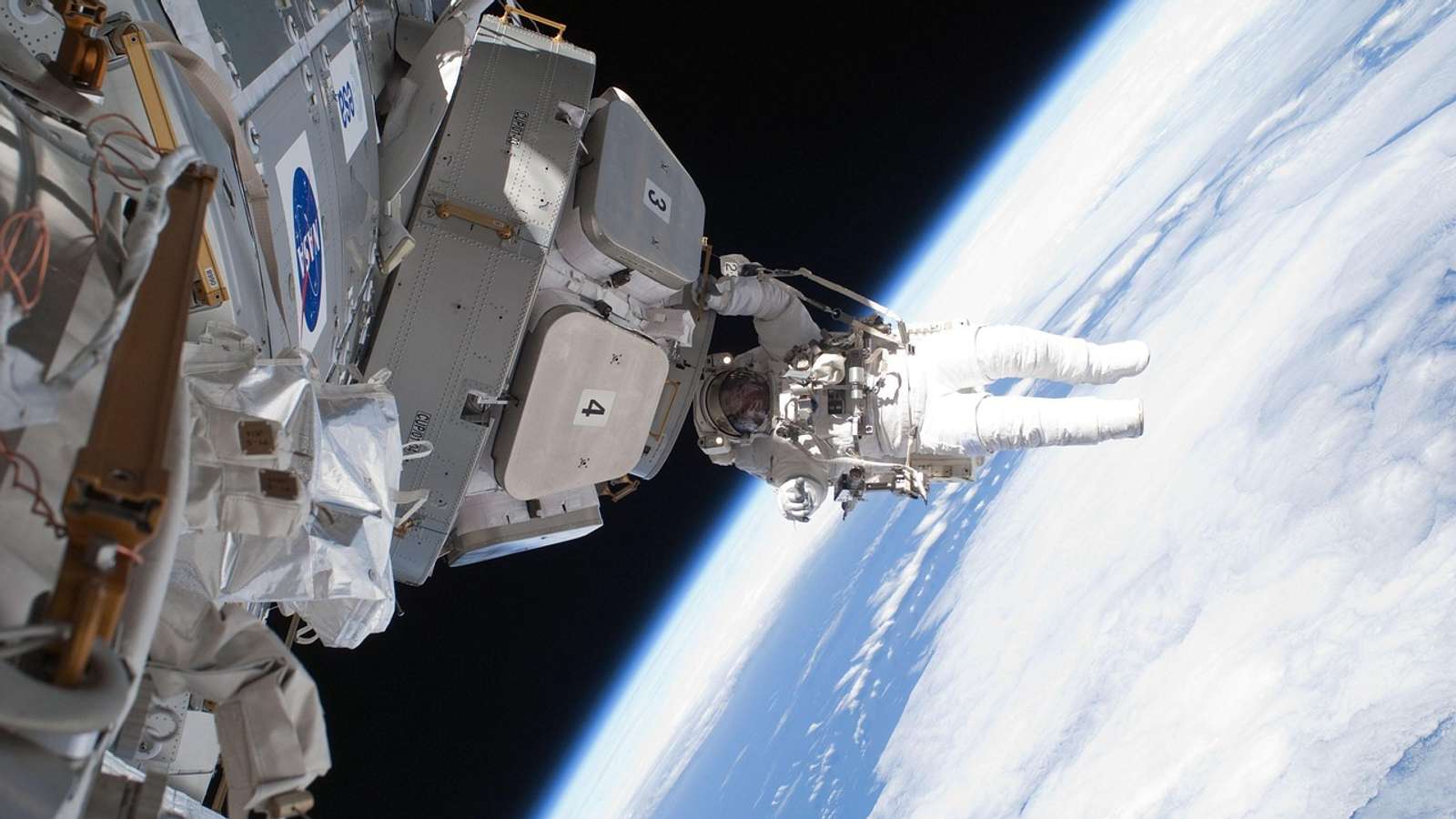
She made three spacewalks within 14 days, spending 19 hours and 42 minutes outside the station. That makes her the second European woman to walk in space, after Italy's Samantha Cristoforetti, and the first French woman.
“Sophie was the first of her class to be assigned to a mission, embarking on a fast-track journey she brilliantly completed.” — Daniel Neuenschwander, ESA Director of Human and Robotic Exploration
290,000 students followed experiments from the station
Adenot was selected in ESA's 2022 astronaut class and was the first of that group to fly. Her outreach reached more than 290,000 students, ESA said, through CNES's Chloriss experiment in about 4,000 schools, ESA's AstroPi programming challenge, amateur radio contacts and a poetry contest. Her posts drew more than 403 million views.
ESA director general Josef Aschbacher linked her return to the agency's next big decision. "Human spaceflight and exploration remain at the centre of our attention as we prepare for the Intermediate Ministerial Council Meeting in Rome in December," he said. "Our ambition is clear: Europe must secure a role in exploration commensurate with its political and economic weight."
Crew-12 was replaced on the station by Crew-13 at the start of October, the AP reported. The intermediate ESA ministerial meeting in Rome is set for December.
Sources
How we choose and verify sources: editorial policy.
Your weekly dose of good news
The 5 biggest positive stories of the week, straight to your inbox. Free, no noise.
Like what you're reading?
Related stories
Webb sees water clouds thickening and thinning on a cold world 7.5 light-years away
Using the James Webb Space Telescope, astronomers watched water clouds grow thicker and thinner on WISE 0855, the coldest known brown dwarf, the first direct confirmation of changing water clouds beyond the solar system.
South Korea's homegrown Nuri rocket places 14 satellites in orbit on its fifth launch
South Korea's Nuri rocket, built entirely with domestic technology, delivered all five of its main satellites and nine of ten small CubeSats to orbit on 7 October, its fourth success in a row.
NASA's TESS passes 1,000 confirmed planets as 70 new worlds join the archive in one week
NASA's Transiting Exoplanet Survey Satellite has now found more than 1,000 confirmed planets, a milestone reached as 70 new planets were added to the NASA Exoplanet Archive in a single weekly update.