A deliberately simple algorithm forecasts Arctic sea ice up to nine months ahead
Researchers at NYU Abu Dhabi built a forecasting method that uses only the historical record of Arctic sea ice. It predicts ice extent up to nine months ahead about as well as far more complex models.
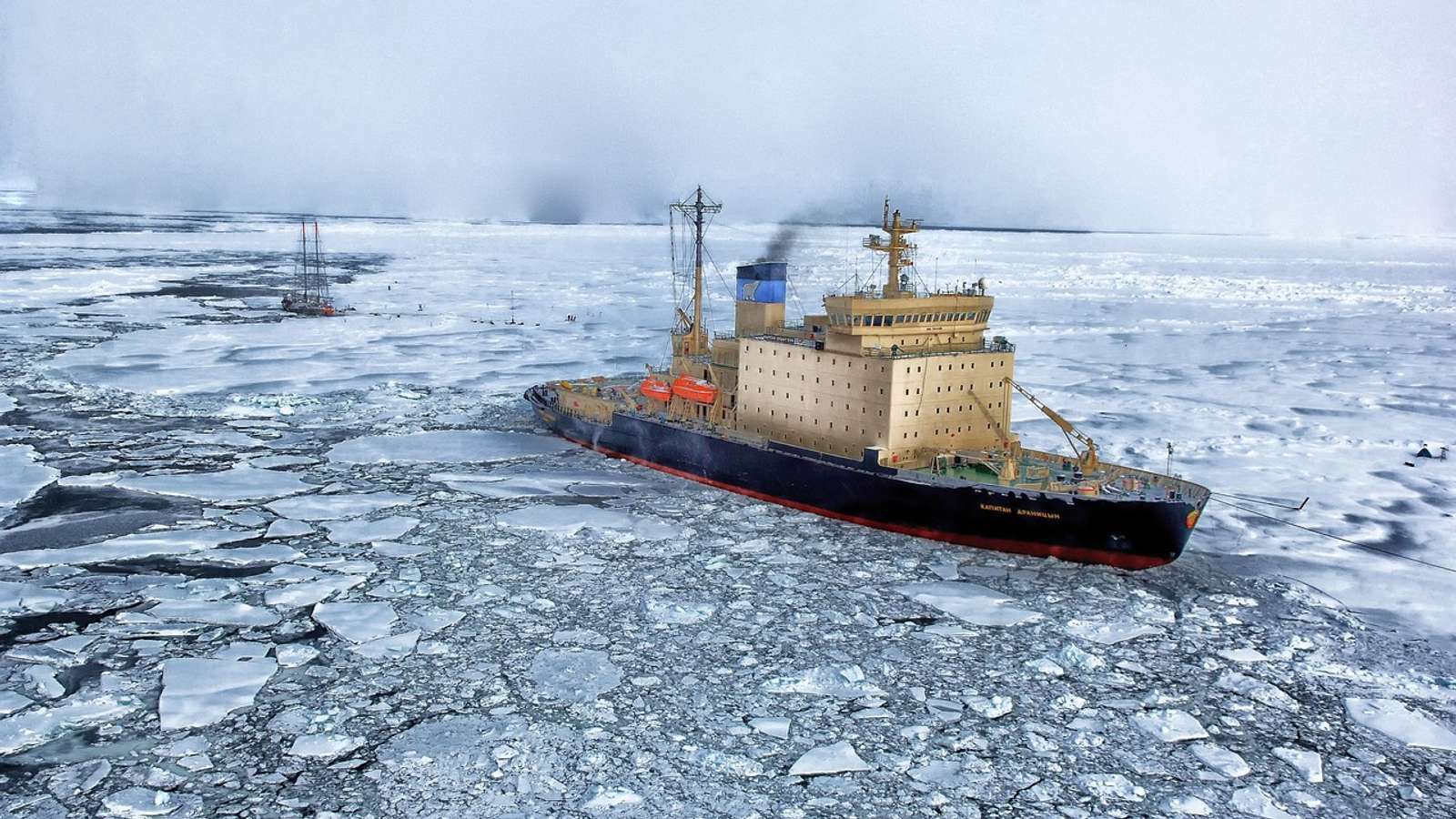
Scientists at NYU Abu Dhabi have developed a forecasting method that predicts how far Arctic sea ice will extend up to nine months in advance, using nothing but the historical record of the ice itself, the university said on 8 October. Its forecasts were about as skillful as those of the models used by the international Sea Ice Prediction Network.
The method is called the Random Analogue Predictor, or RAP. It was developed at the university's Mubadala Arabian Center for Climate and Environmental Sciences (ACCESS), whose inaugural director, Francesco Paparella, is the study's senior author.
The past, not physics, does the forecasting
Most seasonal sea ice forecasts come from physics-based models that simulate the atmosphere, the ocean and the ice together. The researchers propose RAP as a reference point for those models and for newer AI-driven ones.
RAP works differently. It searches decades of sea ice records for past periods that resemble current conditions, then looks at what happened next. Combining many of those analogues produces a set of possible futures rather than a single number. That spread also gives an estimate of how uncertain each forecast is.
“Our approach is deliberately simple, but it performs competitively with much more complex forecasting models.” — Francesco Paparella, director of Mubadala ACCESS, NYU Abu Dhabi
For the September ice extent, the yearly low point, RAP's forecast error was comparable to that of 34 models used for seasonal forecasting, according to the university. The release does not publish the error figures themselves and does not name the journal in which the study appeared.
A yardstick for complex models, not a replacement
The researchers present RAP mainly as a benchmark. "The value of RAP is not that it replaces more sophisticated models, but that it gives us a clear standard against which they can be tested," Paparella said. "If a much more complex model cannot outperform such a simple approach, that tells us something important about how much additional predictive information that complexity is providing."
Other groups are also testing how far simple descriptions can go. An Oxford team recently used AI to find three simple equations behind North Atlantic climate swings, reported here earlier this month.
This year the Arctic ice minimum was the 10th-lowest on record
Arctic sea ice reflects sunlight back into space, and changes in its extent can influence weather and ocean patterns far beyond the polar region.
This year's minimum came on 12 September at about 4.6 million square kilometers, tied with 2008, 2010 and 2025 for the 10th-lowest in the satellite record, NASA and the US National Snow and Ice Data Center reported. The 20 lowest minimums since satellite measurements began in 1978 have all occurred in the past 20 years. "We've plateaued, but we're still low relative to the earlier part of the record," said Walt Meier, a senior research scientist at NSIDC.
Paparella said the team also sees RAP as a low-cost tool for the United Arab Emirates' growing polar and Arctic research activities.
Sources
- NYU Abu Dhabi · nyuad.nyu.edu
- science.nasa.gov
How we choose and verify sources: editorial policy.
Your weekly dose of good news
The 5 biggest positive stories of the week, straight to your inbox. Free, no noise.
Like what you're reading?
Related stories

Oxford team uses AI to find three simple equations behind North Atlantic climate swings
Using an AI method called equation discovery, Oxford physicists derived three readable equations that capture how North Atlantic ocean temperatures, air pressure and rainfall interact over decades.
Vienna physicists build the first nuclear clock that keeps its own laser in tune
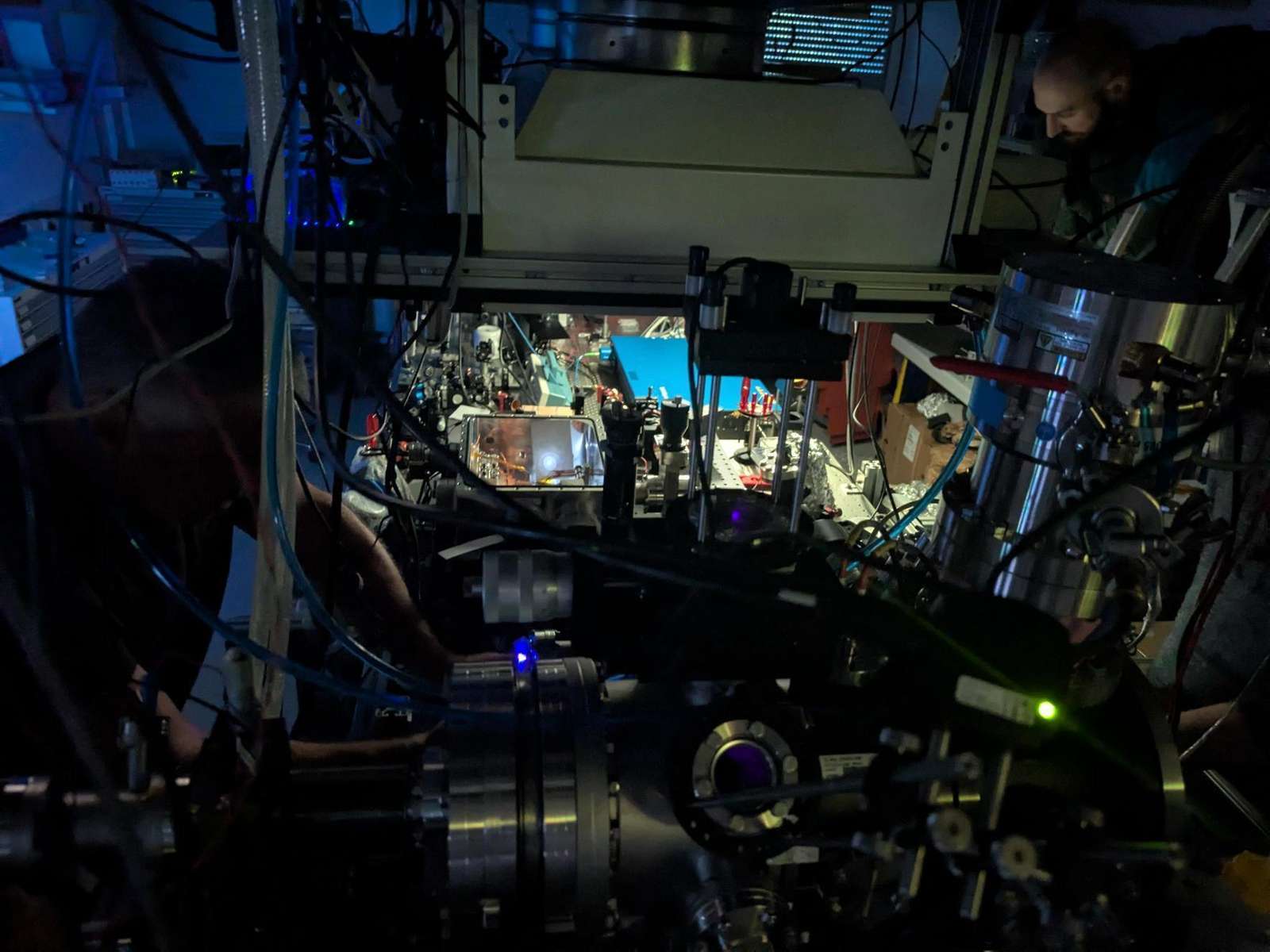
A team from TU Wien and Germany's PTB has built a thorium nuclear clock that stabilizes itself, with a precision equal to an error of about one second in 30 million years. It ran for more than a day on its own.
Webb sees water clouds thickening and thinning on a cold world 7.5 light-years away
Using the James Webb Space Telescope, astronomers watched water clouds grow thicker and thinner on WISE 0855, the coldest known brown dwarf, the first direct confirmation of changing water clouds beyond the solar system.