Australian Team Builds Ultra-Precise Optics to Help LIGO Detect Fainter Gravitational Waves
Researchers at the Australian National University spent three years making two specialized beamsplitters for LIGO, coated to within a nanometre or two across almost half a metre, for an upgrade that will make the detectors more sensitive.
Researchers at the Australian National University have engineered optical coatings for two beamsplitters for LIGO, the international observatory that detects gravitational waves from colliding black holes and neutron stars, ANU announced. The parts are part of an upgrade to make the detectors more sensitive than ever.
Detectors measure a millionth of a billionth of a hair’s width
Gravitational waves are tiny ripples in space-time first predicted by Einstein and first detected directly in 2015. LIGO spots them by measuring changes in distance of about a millionth of a billionth of the width of a human hair, using an extremely pure laser beam as a ruler.
Each beamsplitter is a 45-centimetre disc of ultra-pure glass weighing more than 20 kilograms. One side splits the laser beam exactly in half; the other carries an anti-reflective coating more than 1,000 times more effective than an ordinary spectacle-lens coating.
“We’re coating this glass to within a nanometre or two across almost half a metre – a few atoms’ difference from one edge to the other.” — Professor Robert Ward, Director, Centre for Gravitational Astrophysics, ANU
The team built its own machines to do it
The work took three years. The team developed eight custom automated systems to clean, measure and handle the optics without human contact, in a clean room matching semiconductor-industry standards. ANU says it is one of only two groups worldwide able to make these coatings to the required standard.
The upgraded detectors should pick up more events, including weaker signals from farther away. Australia’s LIGO work is coordinated through OzGrav. Other recent instrument advances include NASA’s Roman telescope taking its first step toward imaging alien worlds.
Like what you're reading?
Related stories
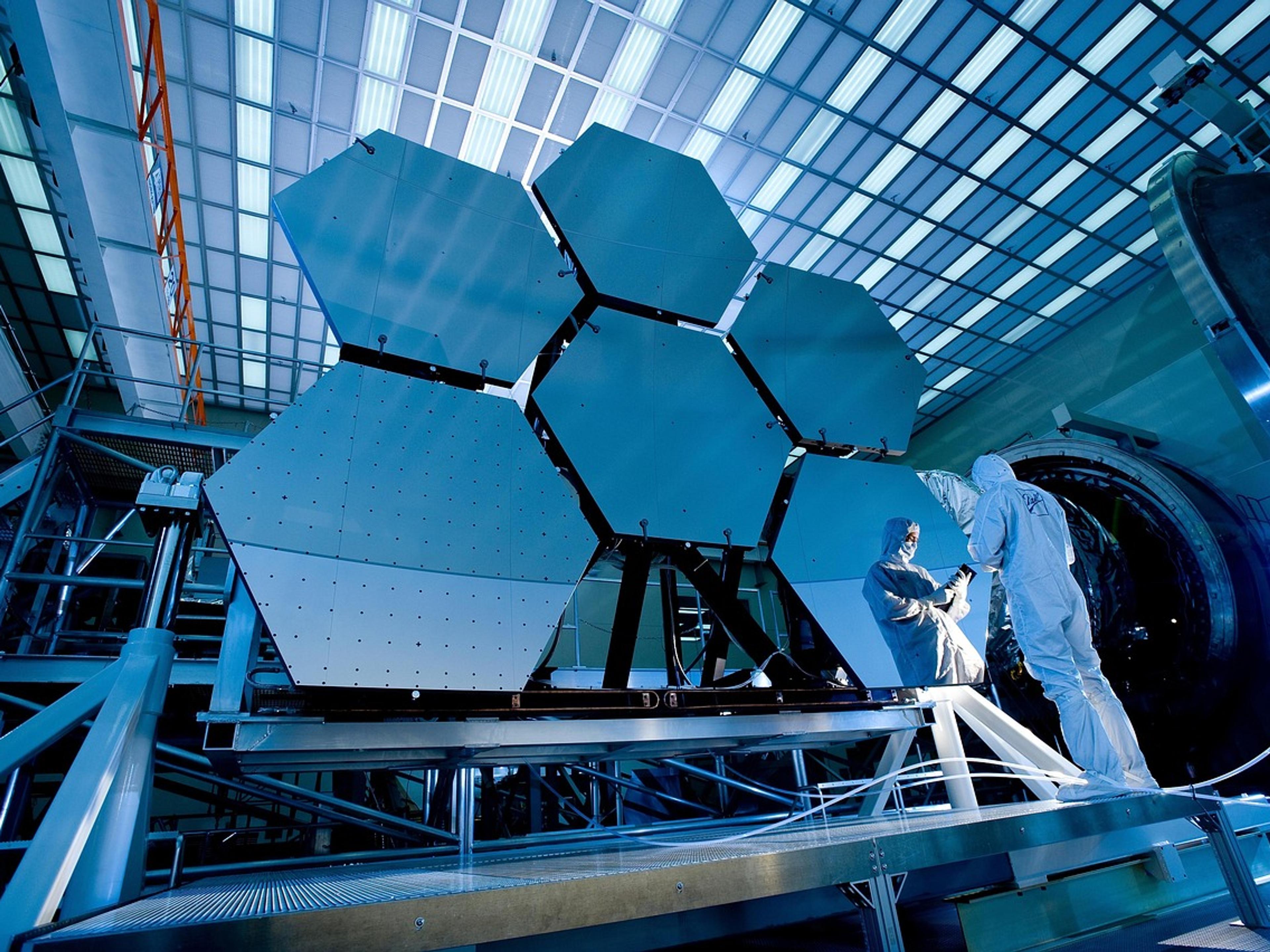
NASA's Roman Telescope Just Took Its First Step Toward Photographing Alien Worlds
NASA's Nancy Grace Roman Space Telescope opened its coronagraph instrument to space for the first time, testing technology designed to block starlight and directly image planets around other stars.
Researchers Used Quantum Vacuum Fluctuations to Raise a Superconductor's Critical Temperature by Up to 5.4%
Placing a thin superconductor inside a specially built terahertz cavity strengthened the quantum fluctuations of empty space around it and raised its critical temperature by up to 5.4%, a team at the University of Science and Technology of China reports.

Animals May Have Evolved Up to 200 Million Years Before the Fossil Record Shows, New Study Suggests
Exceptionally preserved Mongolian microfossils with no animals in them undercut a key argument for a late origin of animals, and molecular-clock analysis points to animal origins between 800 and 700 million years ago, Oxford-led researchers report.