A rose-colored rock found in the Sahara is one of the oldest pieces of Mars ever found on Earth
Teghaza 001, an 800-gram Martian meteorite found in the Sahara in 2022, formed more than 4.1 billion years ago and may come from a part of the Martian crust never sampled before, a NASA-funded study found.
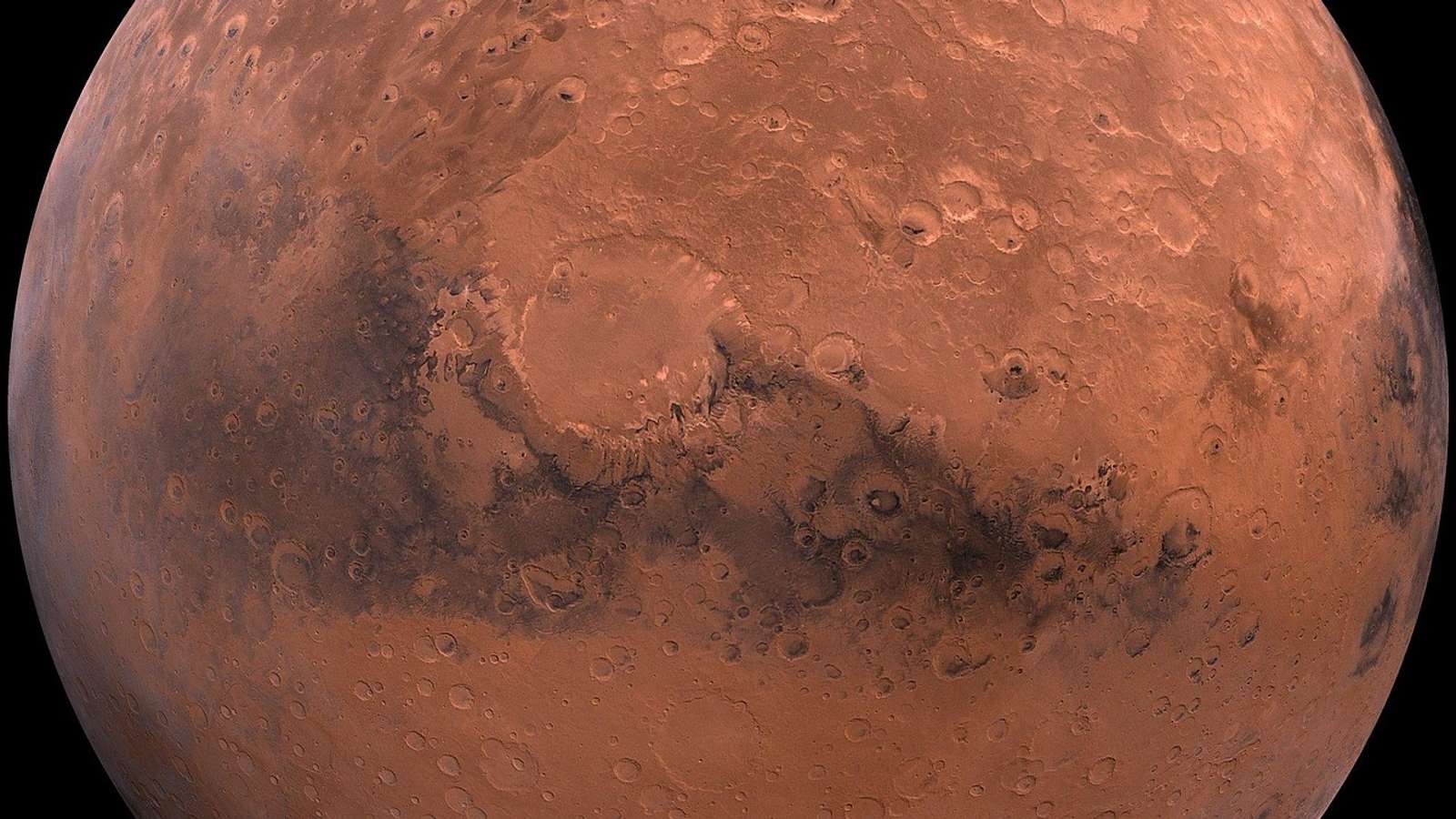
A rose-colored rock found in the Sahara in 2022 is one of the oldest pieces of Mars ever found on Earth, according to a NASA-funded study, NASA's Jet Propulsion Laboratory (JPL) said on 29 October. The meteorite, called Teghaza 001 after the salt plain in Mali where it was found, formed more than 4.1 billion years ago.
Older than almost every other Martian rock
Teghaza 001 weighs about 800 grams, nearly two pounds, and is one of roughly 435 known Martian meteorites. It is one of the three oldest found on Earth, but unlike the other two it contains a mix of igneous minerals, which formed as magma cooled. Water later altered it beneath the surface around 4.1 billion years ago, which suggests the rock itself is even older.
“This is really our first piece of Martian crust from a part of Mars we've never had a sample of before.” — Lee Saper, NASA Ames Research Center, second author
A new way to read a rock’s age
The team found zircon crystals, which are useful for precise dating, and used a new in-situ rubidium-strontium method that dates single mineral grains while preserving the sample. Caltech's Francois Tissot developed the method. “Right now, we are one of very few labs in the world able to perform this kind of age-dating,” he said. Researchers at the University of New Mexico first identified the rock as Martian, using oxygen isotopes. Lee Saper did the work as a postdoctoral scholar at JPL and is now a scientist at NASA's Ames Research Center.
The oxygen isotopes, texture and chemistry suggest a more dynamic water cycle on early Mars, according to JPL. “One of the paper's reviewers called it a Rosetta Stone for Mars,” said lead author Yang Liu of JPL. The initial description appears in the journal Science, and a separate paper on the rock's water content was published in Science Advances in June.
Thirteen possible places of origin
Nobody knows exactly where on Mars the rock came from. Its origin on Mars is still unknown. Based on its minerals and chemistry, the study identifies 13 possible source locations on Mars.
“It was only after we started looking closely that we realized this meteorite is really unique,” Liu said, adding that “we've only scratched the surface.” In space news from Earth's own telescopes, the Rubin Observatory recently found its first possible dwarf planet beyond Pluto.
Sources
- NASA Jet Propulsion Laboratory (JPL) · jpl.nasa.gov
How we choose and verify sources: editorial policy.