A telescope 5,600 meters up in Chile, with the largest submillimeter camera ever built, nears first light
The Fred Young Submillimeter Telescope on Cerro Chajnantor in Chile is finished and preparing its first observations. Its Prime-Cam, with tens of thousands of detectors, is the largest submillimeter instrument ever built, Cornell says.

Construction of the Fred Young Submillimeter Telescope (FYST) in Chile is complete, and the observatory is preparing for its first observations, Cornell University said on 16 October. Its main camera, Prime-Cam, holds tens of thousands of detectors, making it the largest submillimeter instrument ever built.
A 6-meter dish on one of the highest sites on Earth
The telescope stands at 5,600 meters (18,400 feet) on Cerro Chajnantor in the Atacama region, near the ALMA array, according to the CCAT Observatory. It has a 6-meter dish designed for submillimeter to millimeter wavelengths, light that is longer than infrared and is mostly absorbed by water vapor in the atmosphere. The dry, high site is what makes such observations possible from the ground.
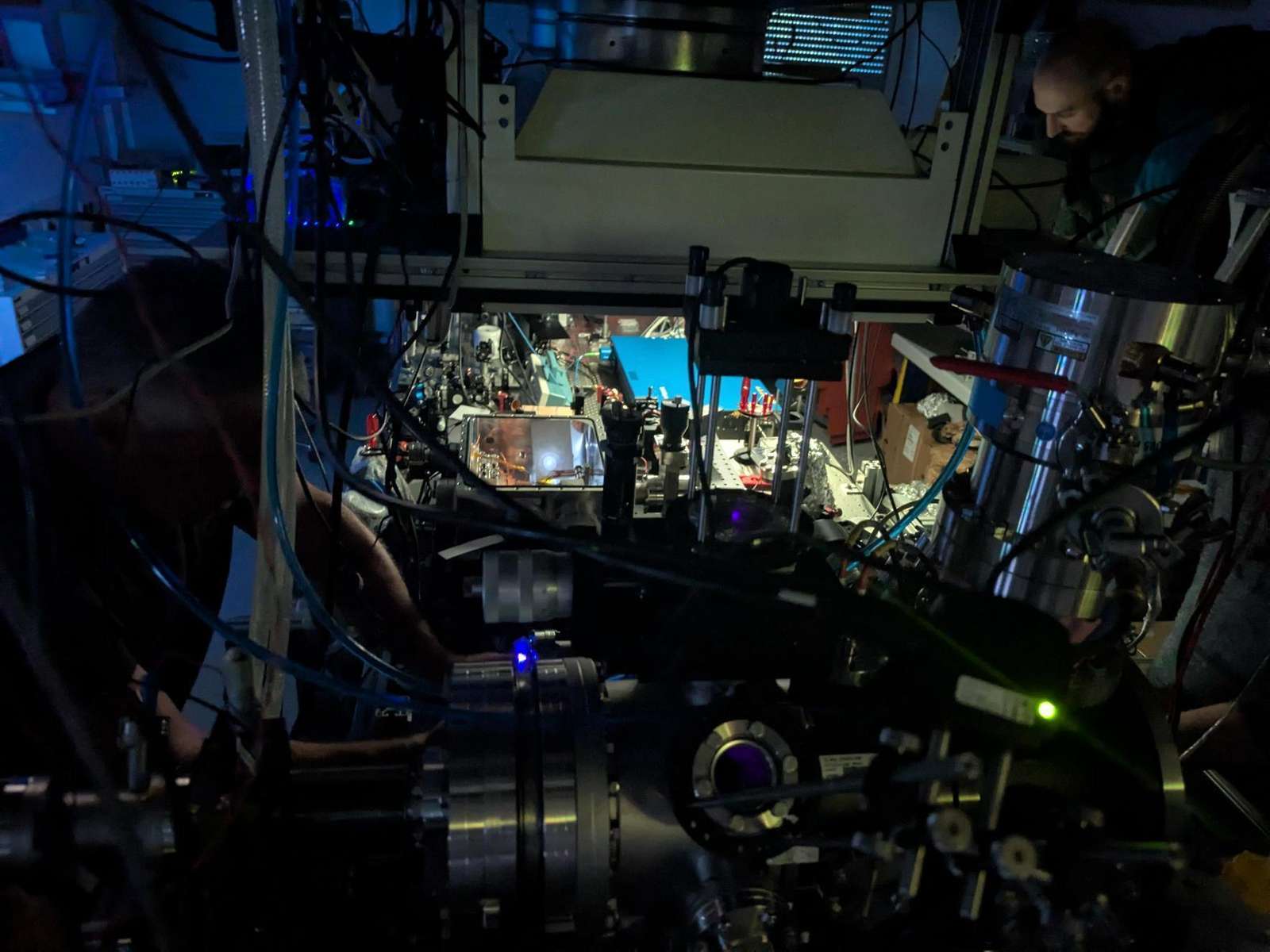
Prime-Cam is built from seven instrument modules, each with three detector arrays, and each array holds thousands of detectors on a single silicon wafer. A second instrument, mini-CHAI, led by the University of Cologne, is also being installed.
FYST “will become the most powerful telescope in its class, facilitating important science,” said Fred Young, the Cornell alumnus and donor the telescope is named after.
Planets first, then galaxy clusters
A milestone event in September marked the end of construction. The first observations will calibrate the instruments by pointing at planets in the solar system. Early science will follow soon after on galaxy clusters, the largest objects in the universe held together by gravity.
Submillimeter light carries information about cold dust and gas, from star-forming regions to the faint glow left over from the early universe. A wide-field camera with this many detectors can map large areas of sky quickly, which makes it suited to surveys rather than close study of single objects.
The collaboration's plans are specific. They include mapping the glow of ionized carbon from the first star-forming galaxies, measuring more than 1,000 galaxy clusters through the Sunyaev-Zel'dovich effect to constrain dark energy and the combined mass of neutrinos, and mapping star formation in the Milky Way and nearby galaxies, according to the University of Bonn. Bonn is one of the German partners, with the University of Cologne and the Max Planck Institute for Astrophysics.
Telescopes are also reading finer detail from distant worlds: Webb recently mapped the lopsided shape of an exoplanet.
No date yet for first light
Cornell has not given a date for first light or for the first scientific results. The article also does not give the total cost or list all partner institutions; the CCAT collaboration says it remains open to new partners.
Sources
- Cornell University · news.cornell.edu
- ccatobservatory.org
- astro.uni-bonn.de
How we choose and verify sources: editorial policy.