Two new howler monkey species are described, the first additions to the group in 84 years
A University of Salford-led team has described Alouatta iroi and Alouatta matogrossensis in Communications Biology, the first new howler monkeys named in 84 years. Southern Amazonia, home to one of them, is among the fastest-deforesting regions on Earth.
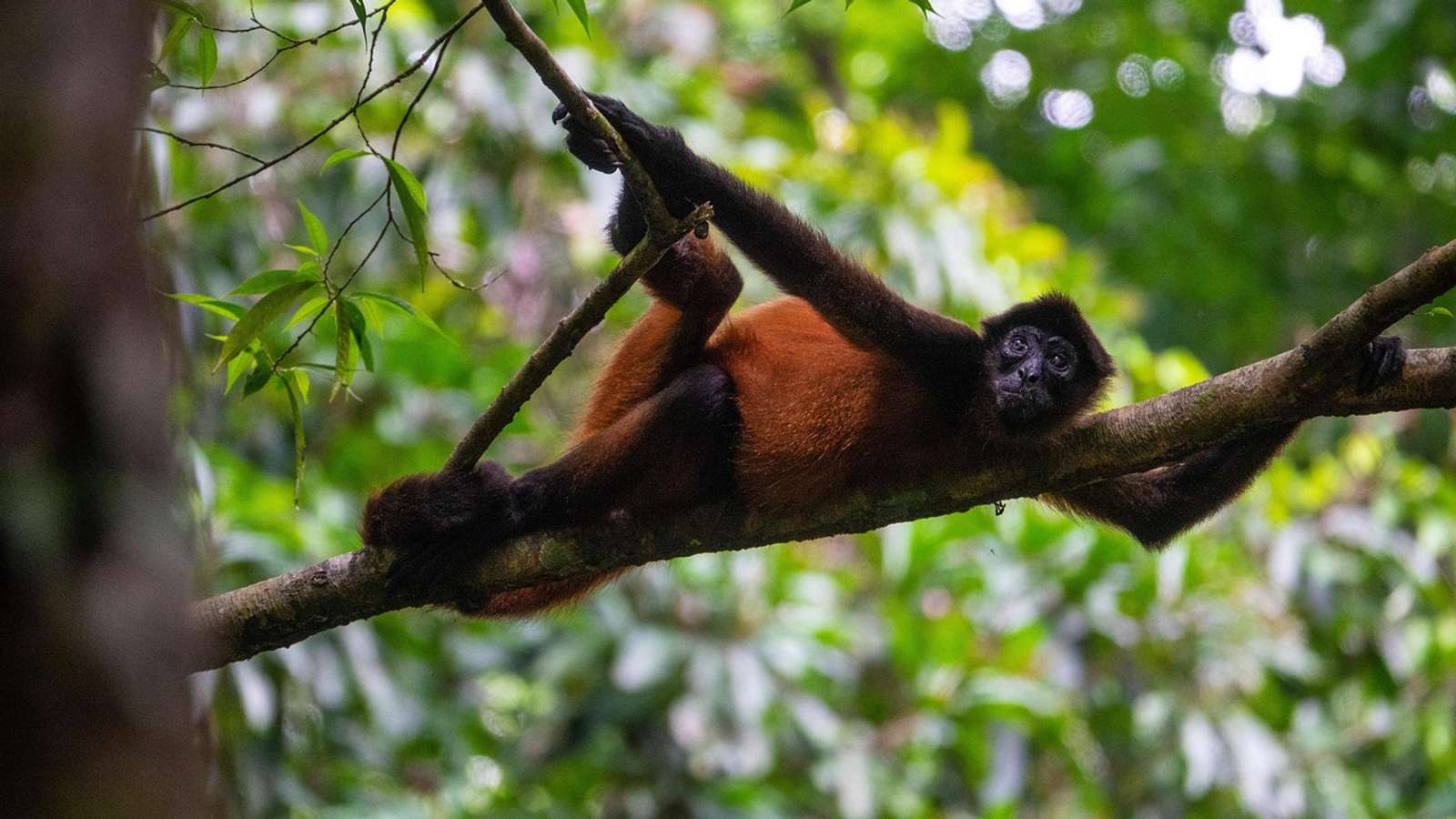
Scientists have described two howler monkey species new to science, the first additions to the group in 84 years, the University of Salford said on 4 November. The species are Alouatta iroi and Alouatta matogrossensis, the Mato Grosso red howler monkey, which lives in southern Amazonia. The last new howler was Alouatta puruensis, described in 1941.
Rivers that split the species apart
The study, published in Communications Biology, was led by Salford with international collaborators. The team analyzed genome-wide data from 11 howler monkey species across South and Central America and combined it with morphological data from museum specimens, producing what they describe as the most comprehensive evolutionary history of howler monkeys so far.
The results suggest rivers shaped the group. The Amazon, Rio Branco and Xingu have acted as barriers for millions of years, letting populations on opposite banks drift into separate species. The work also addresses two gaps biologists call the Linnean shortfall (not knowing how many species exist) and the Wallacean shortfall (not knowing where they live).
“Understanding the different species in existence is the first step towards protecting them.” — Dr Romina Batista, researcher on the study
A new name in a fast-shrinking forest
Being described does not mean being safe. Southern Amazonia is among the world's fastest-deforesting regions, driven largely by cropland expansion. Several populations, including newly described species that have never been assessed for conservation status, may face a significant risk of extinction, the university said. Climate change adds further pressure on Amazonian species. “This discovery comes at a critical time,” said Professor Jean Boubli.
Road deaths, and an assessment still to come
Neither new species has a conservation assessment yet, and the university did not give population numbers. On the ground, the Reconecta Project, led by conservationist Fernanda Abra, works to reduce road deaths among tree-dwelling animals by reconnecting forest fragments. More stories about the variety of life are collected under biodiversity.
Sources
- University of Salford · salford.ac.uk
How we choose and verify sources: editorial policy.