A new armored catfish, Peckoltia kahxi, is described from the rapids of Brazil's Trombetas basin
Scientists from Brazil's Museu Nacional and Museu Paraense Emílio Goeldi have described Peckoltia kahxi, a mottled armored catfish known from just two sites in the rapids of the Trombetas basin in Pará.
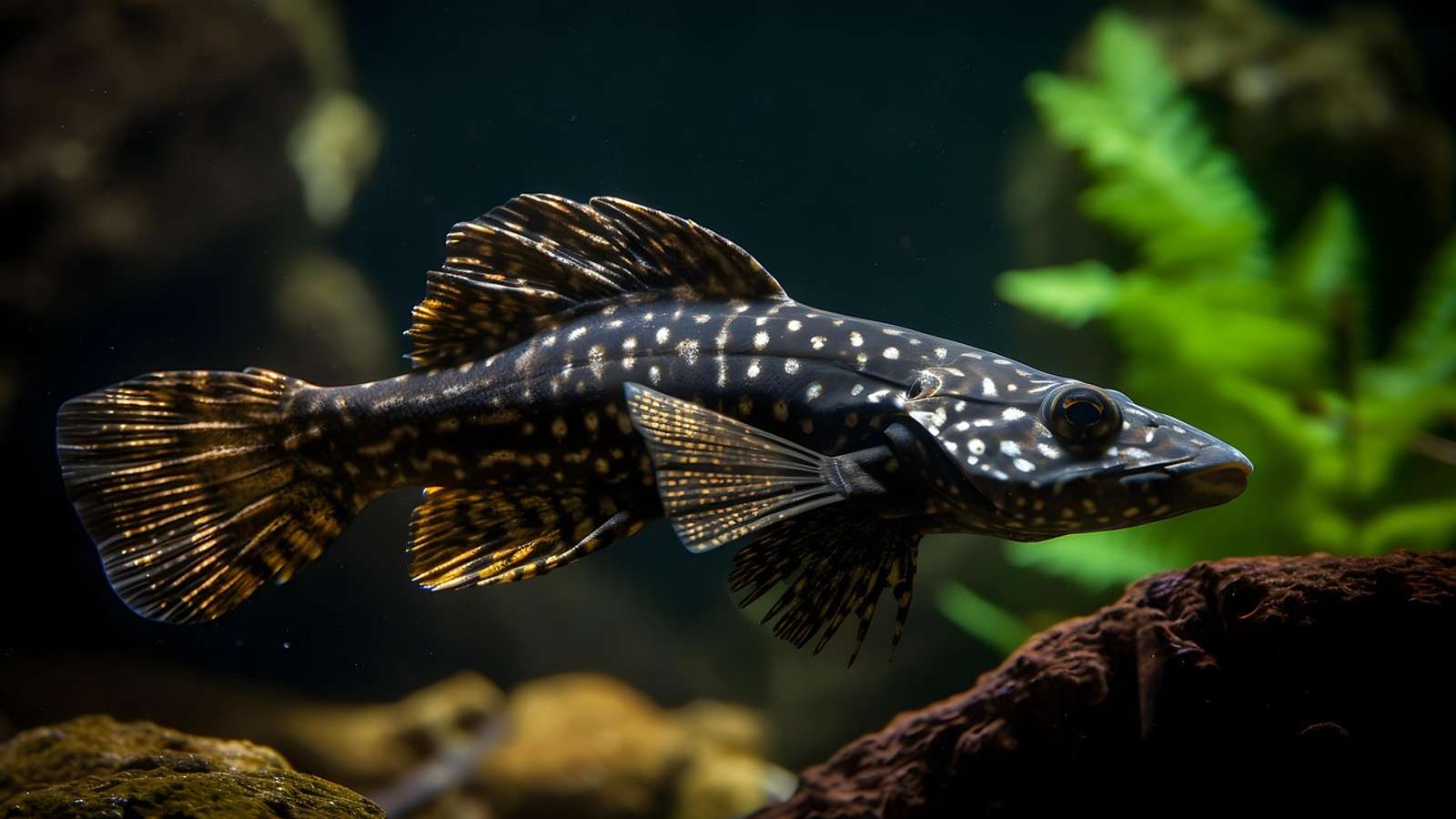
Scientists have described a new species of armored catfish from the fast-flowing rapids of the Trombetas river basin in Pará, Brazil, in a paper published in Neotropical Ichthyology on 16 October. The species, named Peckoltia kahxi, is known from only two places: Cachoeira Porteira on the Trombetas River and the Mapuera River.
The authors are Manuela Dopazo of the Museu Nacional at the Federal University of Rio de Janeiro, and Felipe Arian de Andrade Araújo, Alberto Akama and Wolmar Benjamin Wosiacki of the Museu Paraense Emílio Goeldi in Belém.
Mottled skin, a dark lip and dozens of teeth
Armored catfishes of the family Loricariidae are covered in bony plates. The paper lists ten features that set P. kahxi apart from its relatives, including a mottled color pattern without defined spots, a partly naked belly with clusters of plates along its sides, four dark saddles along the body, dark spots on the membranes of all fins and a completely dark upper lip.
It also has more teeth than several related species: 28 to 51 on the upper jaw and 30 to 42 on the lower. Peckoltia species generally hide during the day in cavities in submerged logs and rocks and come out to feed at night, the authors wrote.
A tiny range in the path of a planned dam
The species lives in rapids, a habitat that dams can flood or change. Its estimated area of occupancy is just 8 square kilometers, small enough to meet the threshold for Critically Endangered, but the authors classified it as Data Deficient because too little is known about its population. Its known range lies almost entirely inside protected areas, so they see no immediate threats.
The main concern is the proposed Cachoeira Porteira hydropower plant, which could alter the rapids where the fish lives, and the authors note that a larger hydroelectric project has also been discussed.
New species are still being found across South America's rivers and forests; in Ecuador, botanists recently described two new Monopyle plants from the Centinela ridge. For P. kahxi, the next step would be surveys of other rapids in the Trombetas basin to see whether it lives beyond its two known sites.
Sources
- Neotropical Ichthyology · scielo.br
How we choose and verify sources: editorial policy.