Eyeless oysters carry up to nine light-sensing proteins, more than the human retina uses to see
A study led from the University of São Paulo found that bivalves without eyes, such as the Pacific oyster, express up to nine light-sensing opsins in their tissues. The human retina uses five to form images.
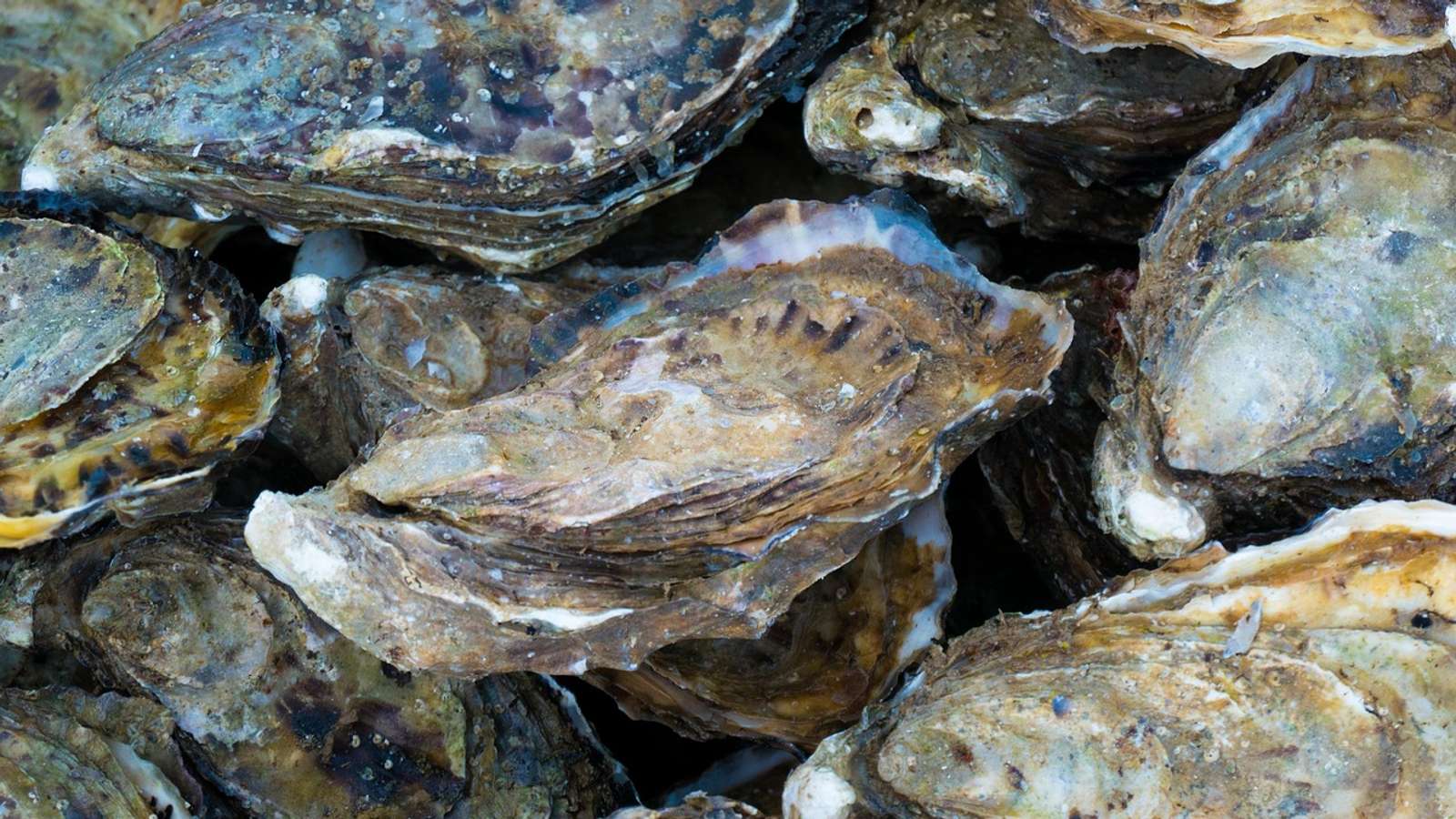
Oysters and other bivalves that have no eyes still carry a large toolkit for sensing light, according to a study led from the University of São Paulo, Agência FAPESP reported on 21 October. Species without simple eyes express up to nine different opsins, the light-sensitive proteins that animals use to detect light. The Pacific oyster (Magallana gigas), which has no eyes, has nine.
For comparison, the human retina uses five opsins to form images, and people express at least four more in the skin, the article noted. Bivalves that do have simple eyes, called ocelli, express between five and 12.
Reading which genes are switched on
The team studied 17 bivalve species from all five orders of the group Pteriomorphia, which includes oysters, mussels and scallops. Nine were collected on the coast of São Sebastião in São Paulo state, three came from the United States and five came from public databases. The researchers removed the ocelli or the mantle margin, the edge of the body most exposed to light, and sequenced which genes were active there. The work was published in Proceedings of the Royal Society B with colleagues from Iowa State University.
“Our data show that bivalves use a high number of opsins in ocelli, more than is expressed in the human eye.” — Jorge Audino, first author (translated from Portuguese)
Sensing light is not the same as seeing
Most bivalves do not see images at all; scallops, with their many small eyes, are the exception and see in low resolution. The authors stress that the number of opsins reflects how finely an animal can detect light, not whether it can see. Bivalves without eyes were already known to sense shading and close their shells, Audino said; the number of opsins surprised the team and suggests their light sensing is more complex than previously thought.
The researchers also found that the number of opsins did not depend on how mobile a species is, and that the light-sensing system in the mantle margin appears to be ancestral, with the repertoire growing or shrinking independently in different lineages.
Next: other senses, and pollution
The team, led by José Eduardo Marian of the University of São Paulo's Institute of Biosciences, plans to study other senses in bivalves. The authors link the work to understanding how light and chemical pollution affect these animals, which matter both to marine ecosystems and to the people who farm and harvest them.
Sources
- Agência FAPESP · agencia.fapesp.br
- eeob.osu.edu
How we choose and verify sources: editorial policy.