A skull fragment kept in a museum drawer for a century is a new long-clawed dinosaur
A fossil the Natural History Museum acquired in 1924 belongs to a new dinosaur, Invictibellatrix amberina, the first megaraptoran found in Europe. The 3-4 meter predator lived on the Isle of Wight about 120 million years ago.
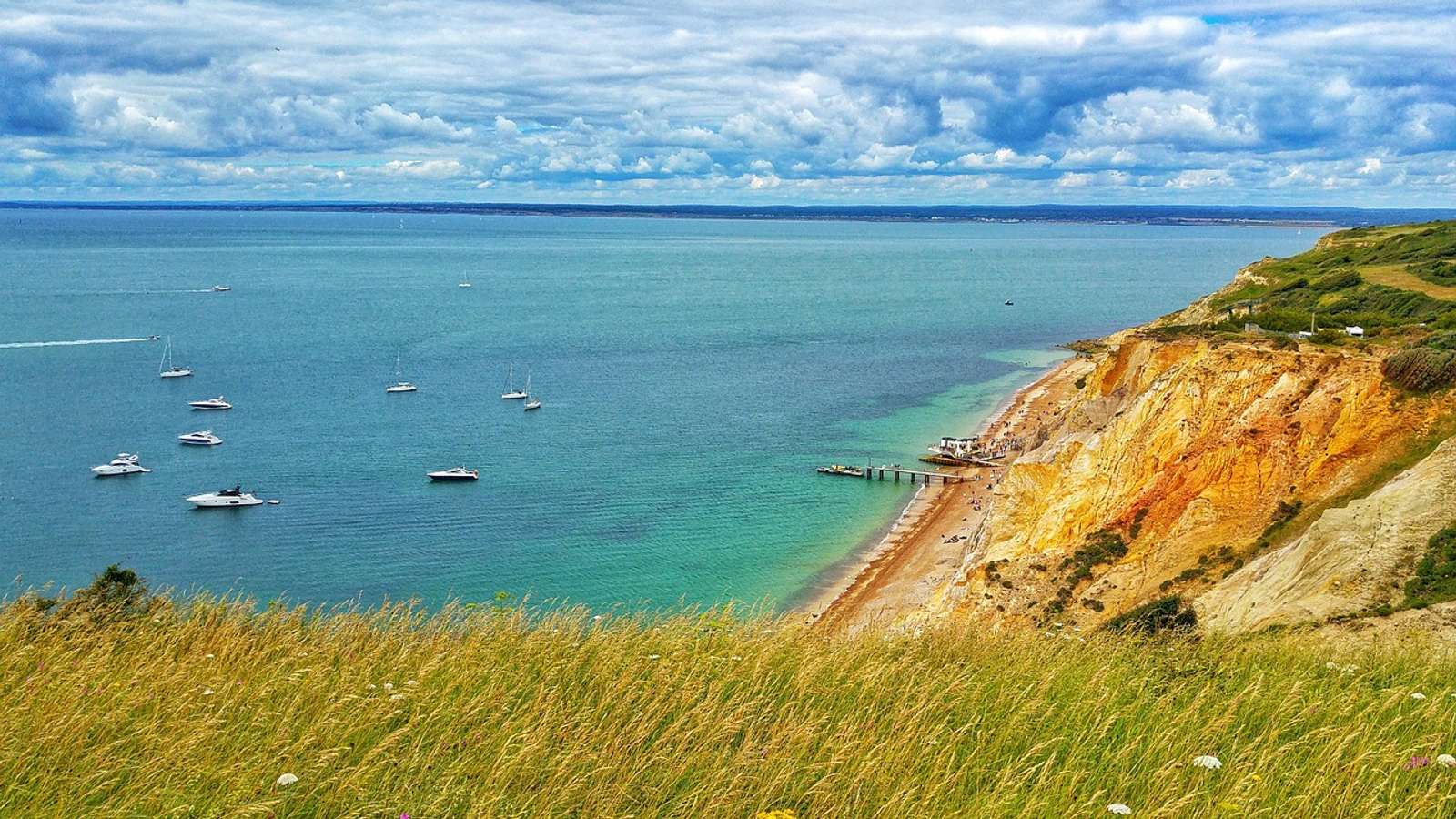
A piece of dinosaur skull that sat in a drawer at London's Natural History Museum for almost 100 years belongs to a previously unknown species, the first of a group of long-clawed predators called megaraptorans to be found in Europe, UCL said. The animal has been named Invictibellatrix amberina and lived on what is now the Isle of Wight about 120 million years ago.
The study was published in Royal Society Open Science by researchers from UCL and the Natural History Museum.
A predator that hunted with its arms
Megaraptorans were close relatives of tyrannosaurs such as T. rex, but with slender heads. They attacked prey with large arms and big curved claws rather than with their jaws. Some later species reached giant sizes; Invictibellatrix is one of the smallest and earliest known.
Based on its closest relatives, it was probably 3 to 4 meters long and just over 1.5 meters tall, said lead author Cassius Morrison of UCL Earth Sciences. It likely had feathers and claws of about 10 to 20 centimeters, and ate small dinosaurs, lizards and mammals, filling a role in the food chain similar to the hyena today.
“For humans this dinosaur would have been more dangerous than a T. rex. We would have been perfectly sized prey.” — Dr Cassius Morrison, UCL Earth Sciences
Found on a beach, then forgotten
The fossil was picked up at the foot of a cliff on the island's southwest coast by Reginald Walter Tooley, an amateur paleontologist. It was among more than 1,000 of his specimens that the Natural History Museum acquired after his death, in 1924, and it was overlooked for study until now.
The researchers CT-scanned the fragment, which comes from the back of the skull, and built 3D models of the bone and of the brain cavity inside it. They compared it with tyrannosaurs, spinosaurs, raptors and other two-legged meat-eaters. Features such as an oval hole where the spinal cord entered the brain and an hourglass-shaped crest marked it as a new species, and computer analyses placed it among the megaraptorans every time.
The Isle of Wight keeps producing finds like this. In 2024 the museum announced the most complete UK dinosaur in a century, also from the island. Old collections can hide surprises elsewhere too: in Egypt, fossils dug up in the 1920s turned out to be a new crocodile species.
Evidence for a route through Europe
The find fills a gap in how these dinosaurs spread. Megaraptorans are thought to have originated in Asia and later became top predators across the southern supercontinent Gondwana, but no European fossil had been found. “This new species is the first proof we have that megaraptorans were also present in Europe and that they reached Gondwana this way rather than island-hopping further south,” said co-author Charlie Scherer, a PhD student at UCL.
The team's modeling suggests megaraptorans were widespread in the Early Cretaceous but had likely died out in the northern landmass of Laurasia by the Late Cretaceous. The study does not explain why. The name means “unconquered female warrior,” and the authors wrote that it is meant to give hope to people who are bullied or oppressed; amberina refers to amber found in the rocks where the fossil came from.
Sources
How we choose and verify sources: editorial policy.
Your weekly dose of good news
The 5 biggest positive stories of the week, straight to your inbox. Free, no noise.
Like what you're reading?