Casper, a 1-in-100-Million White Lobster, Joins a Maine Genetics Study
A rare white “ghost” lobster named Casper has moved from the Maine State Aquarium to the University of New England, where scientists are working out which genes give some lobsters unusual shell colors.
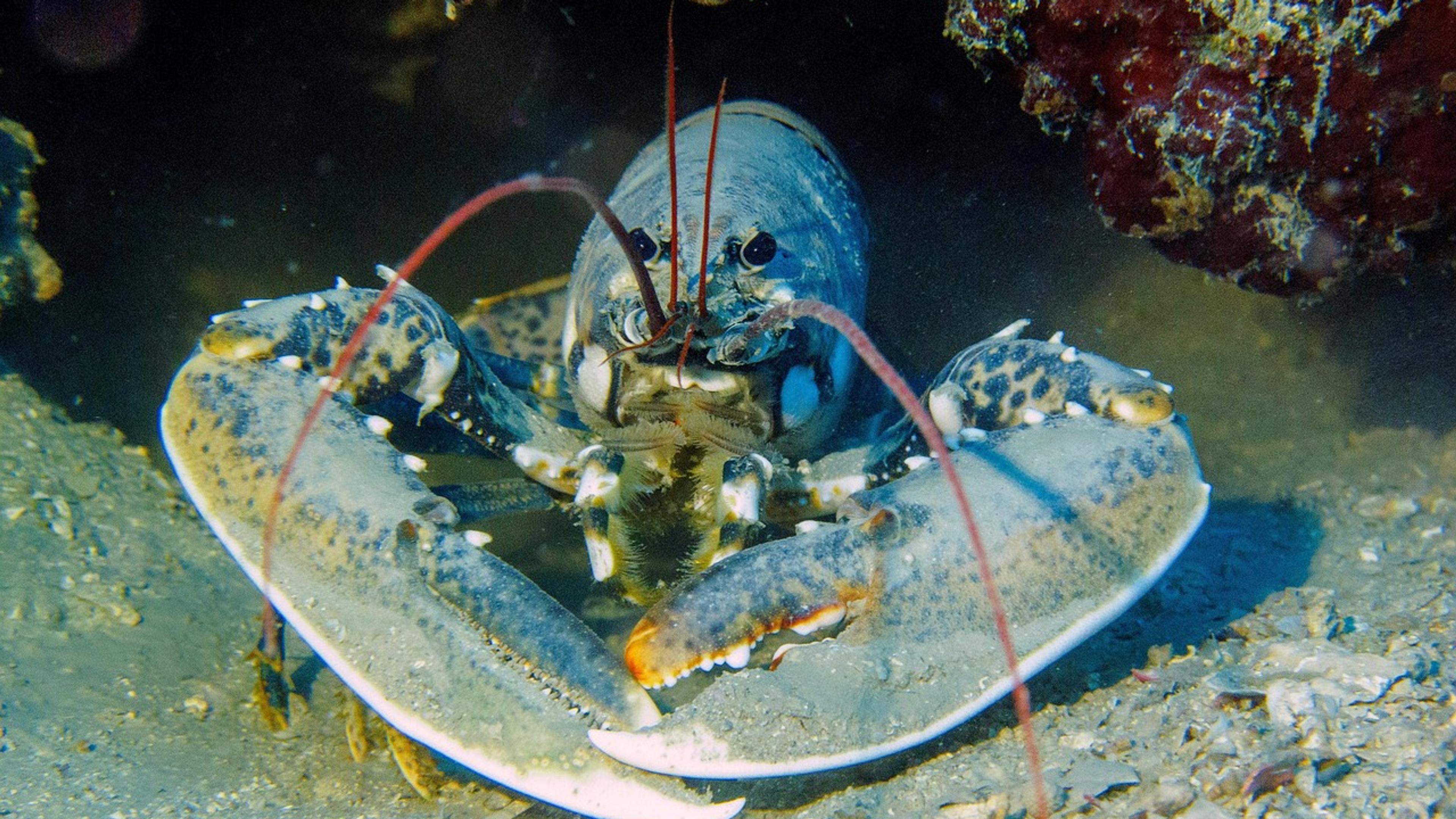
A white lobster so rare that the odds of finding one are estimated at 1 in 100 million has joined a genetics study at the University of New England in Biddeford, Maine, the university said. The lobster, named Casper, was donated by the Maine State Aquarium in Boothbay.
White is the rarest of the unusual lobster colors
American lobsters are normally a mottled brown. Orange, blue, yellow, purple, calico and split-colored animals turn up from time to time, but white ones are considered the rarest of all. Casper is the only white lobster in UNE’s collection, Fox Weather reported.
Casper now lives at UNE’s Arthur P. Girard Marine Science Center. The donation was arranged by Rue Motulsky, a 2024 UNE graduate who worked on the lobster DNA project as a student.
The lab is analyzing more than 15,000 genes
The research, led by marine sciences professor Markus Frederich, aims to find the molecular causes of rare shell colors. UNE started it in 2024 after several unusually colored lobsters arrived, including Peaches, an orange lobster estimated to occur once in 30 million animals.
Peaches later had offspring ranging from typical brown to orange and blue, which let the team study how color is inherited. Researchers took genetic samples from those juveniles and are analyzing more than 15,000 genes. Samples are collected with noninvasive methods, and Casper will be studied without injury.
“Animals like Casper capture people’s attention because they are so rare and beautiful. But, for us, they also provide an amazing opportunity to ask fundamental biological questions.” — Markus Frederich, Director, Invertebrate Physiology Lab, University of New England
Frederich said undergraduate students take part in every step, from caring for the animals to analyzing their genes. Casper gives the team its first chance to study the rarest coloration in the project so far.
Like what you're reading?
Related stories
India Releases First Tigress Into Buxa Tiger Reserve to Rebuild Its Population
A three-year-old tigress, T138, has been released into West Bengal’s Buxa Tiger Reserve, the first step in a phased program to rebuild a breeding tiger population after years without a stable resident one.
Shot Philippine Eagle Survives With Three Airgun Pellets in Her Body
A young Philippine Eagle found weak in Cotabato was carrying three airgun pellets. Vets removed two, and the critically endangered bird is now recovering under close veterinary care.
11,000 Giant Wētāpunga Released at 10 Wild Sites as New Zealand's Heaviest Insect Recovers
A 15-year breeding and release program has moved 11,000 wētāpunga, the world's heaviest orthopteran, to 10 new wild sites, improving the species from Nationally Endangered in 2004 to Nationally Increasing in 2022.