MBARI films the barreleye fish, with its see-through head, in 4K for the first time
MBARI researchers filmed a barreleye fish, Macropinna microstoma, about 600 meters down off California, the institute's 11th sighting of the species and the first in 4K. Its green tubular eyes rotate inside a transparent head shield.
By Diego Callegari, Editor
· United States · 2 min read
Source: Monterey Bay Aquarium Research Institute (MBARI) ↗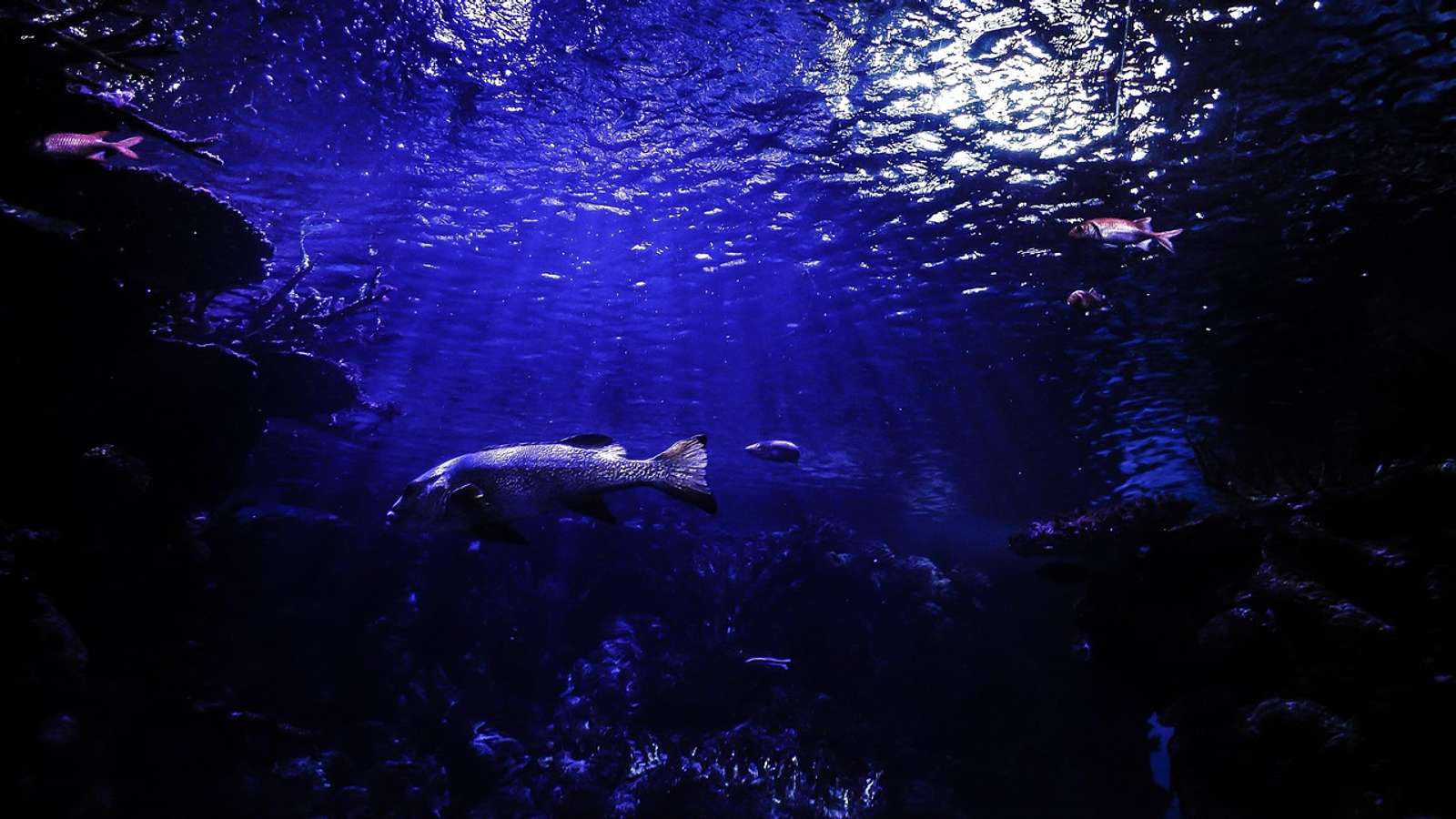
Researchers at the Monterey Bay Aquarium Research Institute (MBARI) have filmed one of the deep sea's oddest animals, the barreleye fish, in 4K resolution for the first time, MBARI said on 28 October. The fish, Macropinna microstoma, was found about 600 meters down, roughly 90 km off the California coast.
Only the 11th sighting in nearly 40 years
The barreleye is rarely seen. MBARI has made roughly 7,000 dives with remotely operated vehicles and recorded more than 41,000 hours of deep-sea video in nearly 40 years, and this was only its 11th observation of the species. The last one was in 2021.
The sighting came during an eight-day expedition studying delicate drifting animals, aboard MBARI's new flagship research vessel, the R/V David Packard. Research specialist Shannon Johnson spotted the fish and logged it, and pilot Cameron Law steered the vehicle Doc Ricketts close enough to film it with a 4K camera and a stereo camera that captures 3D images. The team watched it for about 20 minutes and tried different lighting to show off its see-through head.
“Seeing a barreleye fish is a rare treat.” — Steven Haddock, senior scientist, MBARI
Eyes that rotate inside a clear shield
The fish was first described in 1939, but for decades scientists thought its tubular eyes were fixed and could only look straight up. In a 2008 paper, MBARI scientists Bruce Robison and Kim Reisenbichler showed from video that the eyes can rotate inside a transparent, fluid-filled shield covering the top of the head, MBARI said in 2009. The eyes point upward when the fish searches for prey above it and forward when it feeds. That shield is usually destroyed when the fish is caught in nets, which is why most earlier drawings left it out.
The researchers suspect the barreleye steals small crustaceans caught in the stinging tentacles of siphonophores, colonial relatives of jellyfish, and that the clear shield protects its eyes while it does so. Its eyes have green lenses, which the scientists think may filter out sunlight from above so the fish can pick out the faint glow of animals overhead. That remains a hypothesis.
Footage for future study
MBARI did not collect the fish. The close-up footage will help researchers study how its eyes work in the dim twilight zone of the ocean where it lives. The institute thinks the lens pigments may work much like the green pigments in the eyes of a deep-sea neighbor, the strawberry squid. This summer, MBARI researchers working with Schmidt Ocean Institute also filmed another rarely seen fish, the binocular fish, in the mid-Atlantic.
“Macropinna reminds us of the surprising ways that animals have adapted to thrive in the ocean's midwater,” Haddock said. More ocean discoveries are collected under marine biology.
Sources
How we choose and verify sources: editorial policy.