A salt mix added early makes perovskite solar crystals hold energy 10 times longer
Adding zinc bromide and methylammonium chloride while perovskite crystals form cut defects, so the material held energy from sunlight about 10 times longer, a team from Princeton, UC San Diego and South Korea reported in Science.
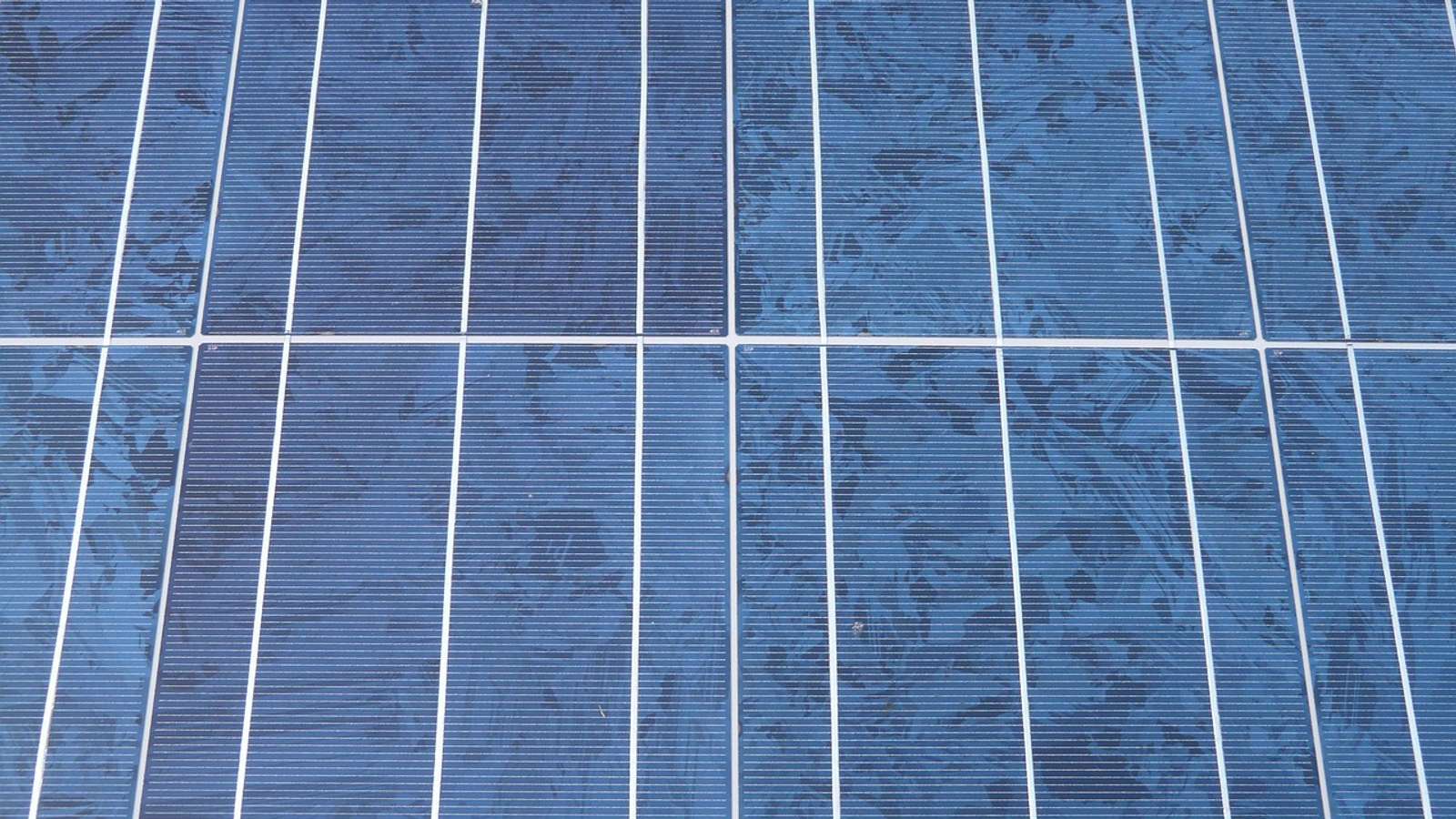
A mix of two salts added early in manufacturing makes perovskite crystals hold on to energy from sunlight about 10 times longer than untreated ones, researchers from Princeton, UC San Diego and South Korea reported on 8 October in Science, Princeton Engineering said.
Perovskites are manufactured crystals used in a new generation of solar cells. They are cheap to make, but tiny flaws at the boundaries between crystal grains waste part of the energy they capture, and the problem grows as devices get larger.
A temporary liquid lets the crystals rearrange
The team added zinc bromide and methylammonium chloride to the starting solution. When the film is heated, the two salts form a mixture that melts at a low temperature and acts as a temporary liquid along the crystal edges, according to Compound Semiconductor. That gives the crystals room to rearrange into larger, more orderly grains.
The methylammonium chloride then evaporates. The zinc stays behind, concentrated at the boundaries, where it helps neutralize electronic defects. The researchers followed the process with X-ray imaging, and the approach worked across the perovskite chemistries they tested.
“Energy is living in the material for so long, it broadens what's actually possible with a semiconductor.” — Dane deQuilettes, assistant professor, Princeton University
Connor Dolan, a co-first author from David Fenning's lab at UC San Diego, said the treated films “had the longest lasting electron-hole pairs ever reported for any direct-bandgap semiconductor.” Jason Yoo of the Korea Research Institute of Chemical Technology is the paper's first author, and Sungkyunkwan University also took part.
A modest power gain, measured in the lab
Longer-lived energy carriers matter because the cell has more time to collect them as electricity. Princeton estimates the technique could raise the power output of cutting-edge perovskite cells by about 1%. That is a small figure on paper, but at this level of efficiency, single percentage points are hard to win.
The results come from lab-scale films and devices. Neither university has given a timeline for use in commercial panels. Other groups are chasing gains by studying how materials form as well: researchers at Warwick found that short-lived "in-between" materials could help make better batteries and solar fuels.
The paper, titled "Volatile eutectics to tailor crystallization for perovskite optoelectronics," was published in Science on 8 October.
Sources
- Princeton Engineering · engineering.princeton.edu
- compoundsemiconductor.net
How we choose and verify sources: editorial policy.
Your weekly dose of good news
The 5 biggest positive stories of the week, straight to your inbox. Free, no noise.
Like what you're reading?