A 19-year-old in Berlin no longer needs blood transfusions after Germany's first routine CRISPR treatment
Charité in Berlin has given Germany's first routine CRISPR-based treatment to a 19-year-old with beta-thalassemia. Four months later his hemoglobin is normal and he no longer needs transfusions.
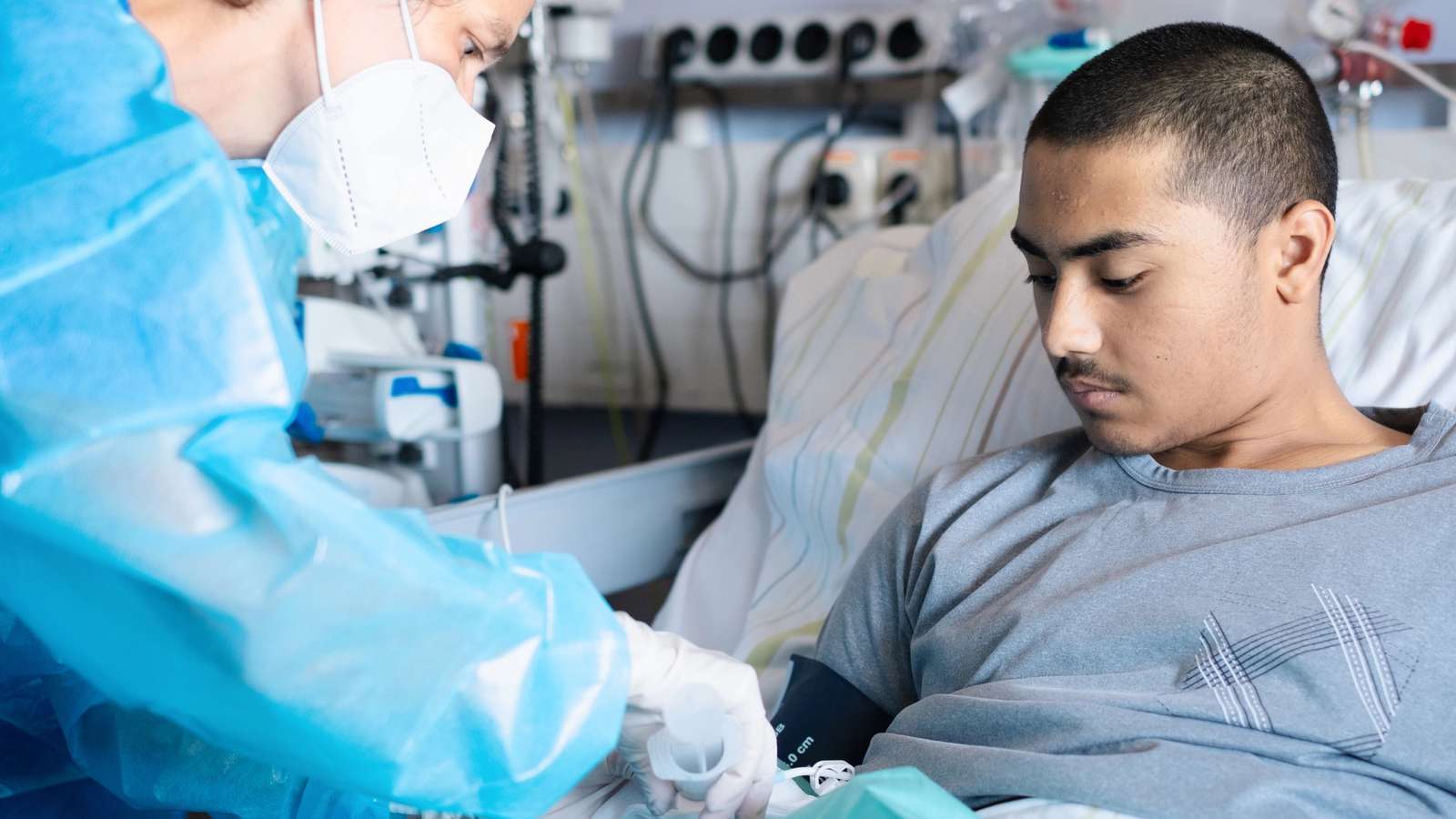
A 19-year-old with the inherited blood disorder beta-thalassemia no longer needs regular blood transfusions after becoming the first patient in Germany to receive a CRISPR-based gene therapy as standard care, Charité – Universitätsmedizin Berlin said. The patient, named only as Mohammad, received the treatment, called exagamglogene autotemcel (Exa-cel), on 28 May.
Within 40 days his body was making fetal hemoglobin again, and his total hemoglobin is now in the normal range, according to the hospital. He left Charité just under six weeks after the infusion.
“On May 28, basic research turned into medical care.” — PD Dr. Lena Oevermann, head of the Hemoglobinopathy Program, Charité
The gene edit switches a fetal form of hemoglobin back on
People with beta-thalassemia cannot produce enough working adult hemoglobin, the protein in red blood cells that carries oxygen, and many depend on transfusions for life. Exa-cel takes a different route. Doctors first collected Mohammad's blood stem cells and sent them to the manufacturer's laboratories in the Netherlands. There, CRISPR-Cas9 gene editing reactivated the gene for gamma-globin, a part of the fetal hemoglobin that every person makes before birth and that the body normally switches off afterward.
"Because fetal hemoglobin can transport oxygen just as effectively as the hemoglobin produced in adulthood, it can eliminate the oxygen deficiency in people with beta-thalassemia," Oevermann said. After chemotherapy to make room in his bone marrow, more than 900 million edited cells were infused. The whole process took about 12 months.
Emmanuelle Charpentier, who first described CRISPR-Cas9 with Jennifer Doudna in 2012 and shared the 2020 Nobel Prize in Chemistry for it, laid the foundation for the therapy through a company she founded, according to Charité. Exa-cel was developed by CRISPR Therapeutics and Vertex Pharmaceuticals.
What it means for patients: an option for some, with real risks
The European Medicines Agency gave Exa-cel, sold as Casgevy, a conditional marketing authorization in February 2024. For beta-thalassemia it is approved for transfusion-dependent patients aged 12 and older who could have a stem cell transplant but have no matched related donor, according to the EMA. In the main study behind that approval, 39 of 42 patients went at least 12 months without transfusions; the EMA notes these were interim results from an ongoing, uncontrolled study.
The treatment is only given at specialized centers, and Charité is the first qualified center in Germany. A stem cell transplant was not an option for Mohammad: "a stem cell transplant is only an option up to age 14, because after that the risks of complications simply become too great," Oevermann said. His insurer approved the therapy after a case-by-case review.
The preparation is hard on the body. Chemoconditioning can cause painful inflammation of the mucous membranes, is likely to cause infertility and can damage the liver. "Furthermore, we do not yet have data on the long-term safety and efficacy of the gene therapy," Oevermann said. Under the conditional approval, every patient treated with Exa-cel must be followed for 15 years.
Charité expects Mohammad's hemoglobin production to reach its full level about six months after the infusion. He would like to start vocational training, according to his doctor. Other stem cell treatments are moving forward as well, such as sugar-tagged stem cells sent to bone marrow, which showed early promise against osteoporosis in a small trial.
Not medical advice. This article reports on research and health programs for general information. Results from early studies often change in larger trials. Talk to a doctor before making decisions about your own health or treatment.
Sources
- Charité – Universitätsmedizin Berlin · charite.de
- ema.europa.eu
How we choose and verify sources: editorial policy.
Your weekly dose of good news
The 5 biggest positive stories of the week, straight to your inbox. Free, no noise.
Like what you're reading?
Related stories
Sugar-Tagged Stem Cells Sent to Bone Marrow Show Early Promise Against Osteoporosis
In a first-in-human trial in Murcia, Spain, 10 women with advanced osteoporosis received their own stem cells with a sugar tag that steers them to bone marrow. No serious side effects occurred and fractures fell sharply, but the study had no control group.
Lab-grown salivary glands made from stem cells survived for more than 40 days in mice
University at Buffalo researchers grew tiny salivary glands from human stem cells. Transplanted into mice, they survived more than 40 days and formed saliva-making cells, an early step toward treating severe dry mouth after cancer radiation.
Gene therapy plus light goggles gave six of 10 blind patients a meaningful gain in light sensitivity
In the first group of blind patients treated with optogenetic therapy, the treatment was safe in all 10 and six gained clinically meaningful light sensitivity. It did not restore normal sight.