A material built from tiny robots shakes itself into one shared rhythm, forming a time crystal
Physicists built metamaterials from dozens of linked sensors and motors that start vibrating chaotically and then settle into one slow, synchronized rhythm, a state called a time crystal. The work, led from Amsterdam and Birmingham, is in Nature.
Physicists have built materials out of linked sensors and motors that start out vibrating in small, uncoordinated ripples and then organize themselves into a single shared rhythm, the University of Birmingham said. The synchronized state is a time crystal, a form of matter whose parts move in regular, endlessly repeating cycles. The study was published on 14 October in Nature.
Small ripples grow until everything moves together
The team calls the process wave coarsening. Vibrations first appear at short wavelengths, then grow longer, slower and larger until the whole material moves as one. The paper compares it to familiar coarsening in other systems, such as patterns that grow when emulsions separate or metals are magnetized, except that here it happens in vibrations rather than through a slow drift toward equilibrium.
The key ingredient is what physicists call non-reciprocal interactions: one unit's response to its neighbor does not have to be mirrored back. With that symmetry broken, the material does not settle into rest but into collective motion. The experiments and the team's model show that random disturbances do not break up the order as the material gets bigger.
Robots instead of atoms
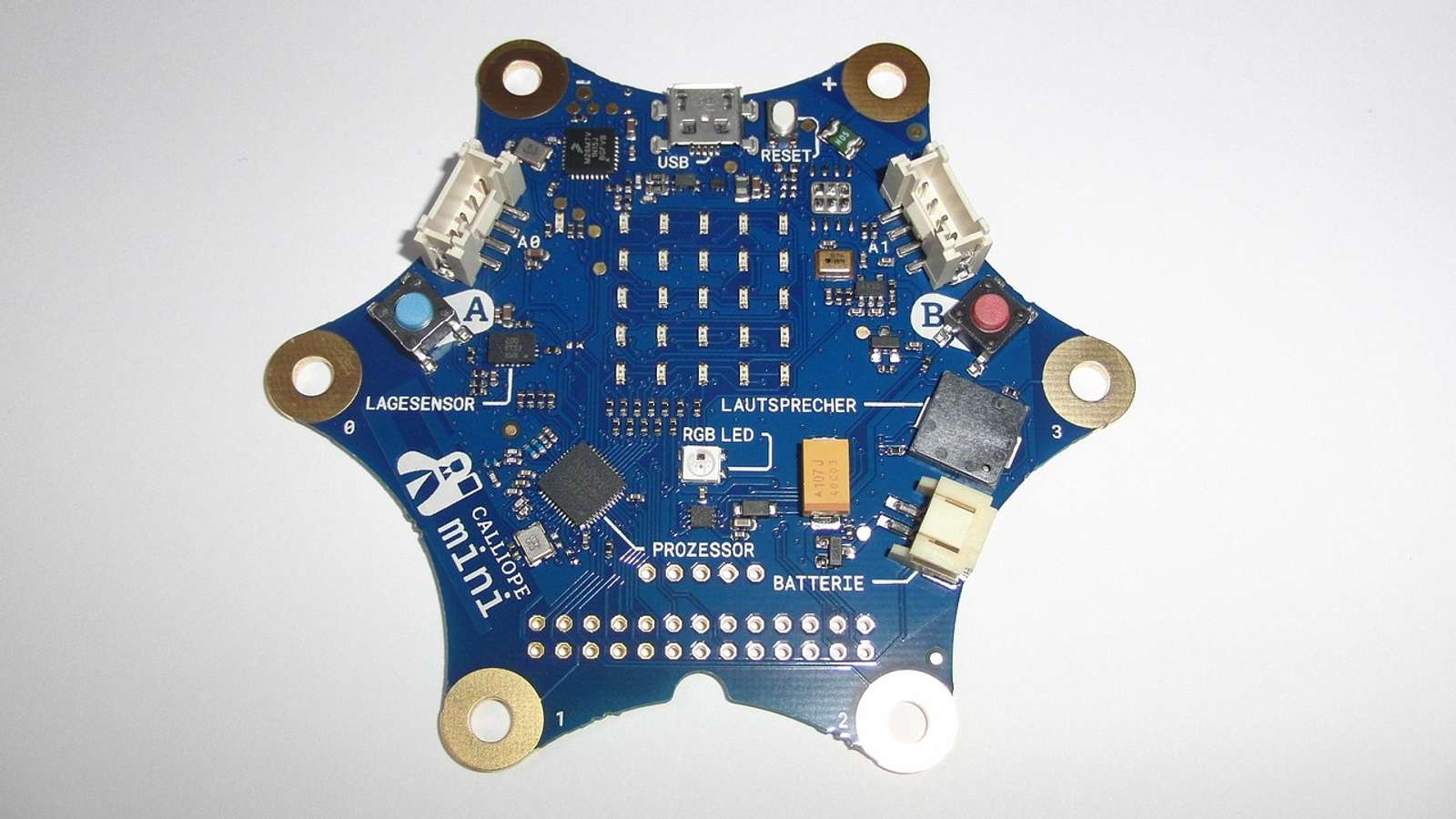
The particles in this time crystal are small robots. The metamaterials combine elastic structures, sensors, electronics and actuators, with more than 100 sensors and actuators, 3D-printed parts and custom-made motors in total. One version, a two-dimensional honeycomb of 37 active units, began oscillating on its own at around 30 times a second and ended in one collective motion. A ring of 24 motorized units settled into a slow shared cycle.
Building them was slow work. Corentin Coulais, who leads the University of Amsterdam group where the research began, said interns assembled the materials by hand, with more than 20 points of glue needed for each actuator.
“Wave coarsening could be exploited as a way of controlling shape changes and directed motion.” — Dr Jack Binysh, Assistant Professor, University of Birmingham
Possible uses in robots that change shape
Co-lead author Jonas Veenstra, now at ENS Lyon, said one material could support several stable motion patterns, each serving a different robotic function, such as a particular change of shape or direction of movement. The authors also point to acoustics and optomechanics. Shape-changing materials are an active field: at MIT, engineers recently built 3D-printed circuits that fold into different shapes.
The work is fundamental physics demonstrated in lab prototypes. Next, the team wants to build three-dimensional active materials that can shear, bend and twist, and to find out how wave coarsening behaves in 3D.
Sources
- University of Birmingham · birmingham.ac.uk
- nature.com
How we choose and verify sources: editorial policy.
Your weekly dose of good news
The 5 biggest positive stories of the week, straight to your inbox. Free, no noise.
Like what you're reading?