Chinese company ENN reports more than 100 million hydrogen-boron fusion reactions a second in its own reactor
ENN Group says its EXL-50U device in Langfang produced over 100 million hydrogen-boron fusion reactions per second, a fuel that releases no neutrons. It is a physics result, not net energy, and the company targets first electricity in 2030.
By Diego Callegari, Editor
· China · 3 min read
Source: Science and Technology Daily (reporting ENN's announcement) ↗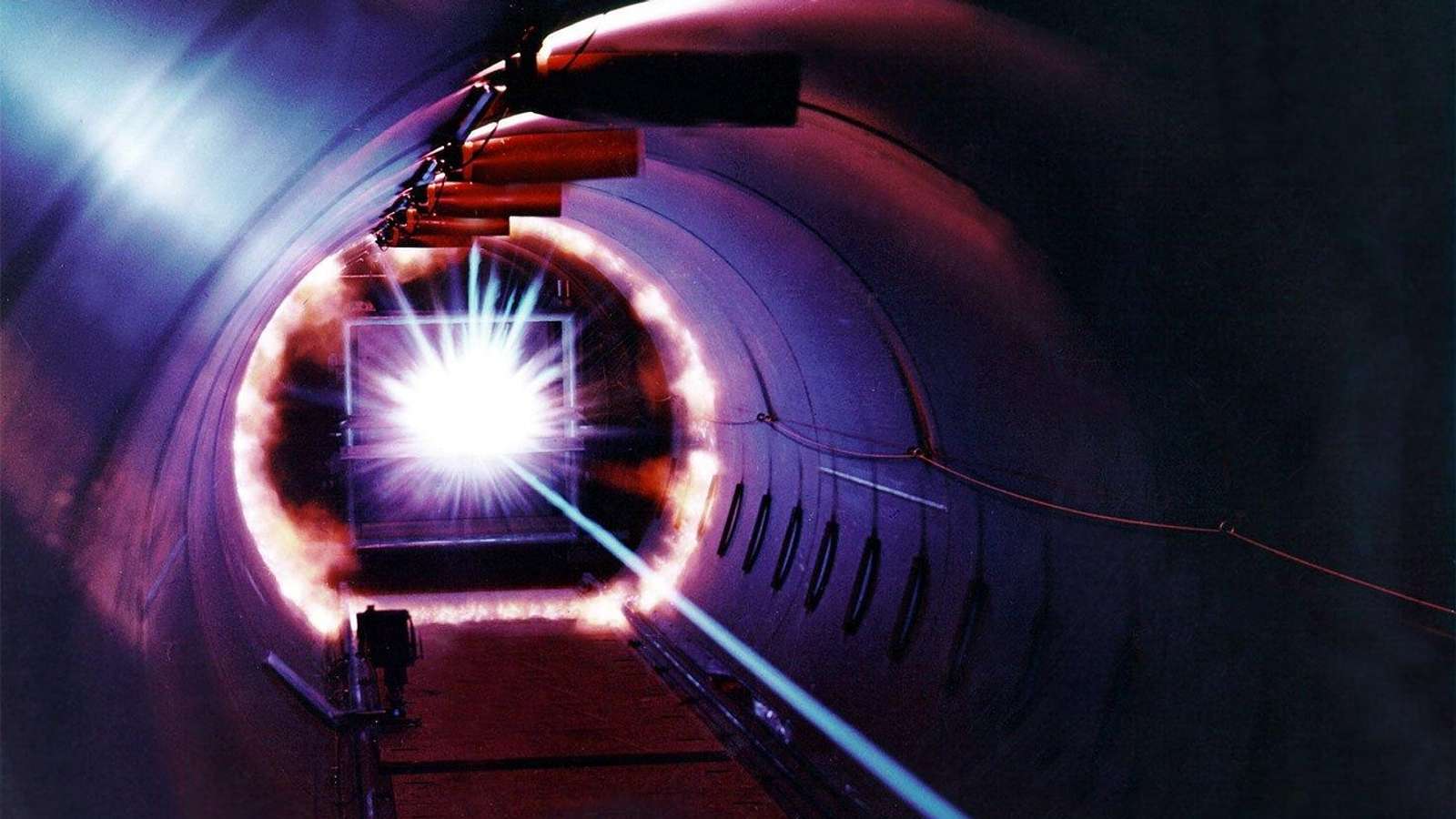
Chinese energy company ENN Group says its EXL-50U fusion device in Langfang, Hebei province, has produced hydrogen-boron fusion reactions at a rate of more than 100 million per second, according to Science and Technology Daily, the newspaper of China's science ministry, which reported the announcement on 28 September. ENN calls it the first time a commercial fusion company has achieved the reaction on a device of its own.
The figure comes from the company. More than 10 fusion experts from research institutes and universities in several countries reviewed the measurements and agreed that the device had produced repeatable readings of the alpha particles the reaction gives off, the newspaper reported. No peer-reviewed paper on the result has been published yet.
A fuel that produces helium instead of neutrons
Most fusion projects, including the international ITER reactor in France, fuse two forms of heavy hydrogen, deuterium and tritium. That reaction is the easiest to ignite, but it releases fast neutrons that make reactor walls radioactive and wear them down, and tritium is scarce and radioactive itself.
Hydrogen-boron fusion joins a proton with a boron-11 nucleus and splits the result into three helium nuclei, also called alpha particles. It produces no neutrons, and both fuels are abundant. The catch, according to Science and Technology Daily, is that it needs much higher temperatures and better confinement than deuterium-tritium fusion.
To get around this, ENN's team fired high-energy neutral particle beams into the plasma and added radio-frequency waves. Together these pushed a larger share of the protons to the energy at which a collision with boron-11 is most likely to fuse. Signals from more than 20 alpha particles appeared at once on the detectors late one night in mid-September, Science and Technology Daily reported, and the team spent about a week checking them before announcing.
Not the first proton-boron fusion, but a first for a company's own machine
The reaction itself has been seen in a magnetically confined plasma before. In 2023, US company TAE Technologies and Japan's National Institute for Fusion Science reported alpha particles from proton-boron fusion in Japan's Large Helical Device, a government research machine, in a paper in Nature Communications, Physics World reported at the time. ENN's claim rests on doing it in a reactor the company built and runs itself.
The EXL-50U is a spherical torus, a compact, more rounded variant of the doughnut-shaped tokamak. In April 2025 ENN said it had driven a plasma current of one million amperes in it using hydrogen-boron fuel, according to the company's research arm.
ENN aims to light its first lamp with the fuel in 2030
The result is a reaction rate, not power. ENN has not reported getting more energy out of the plasma than it put in, and the company's own plan places electricity generation years away. Its next device, Helong-2, is under construction and due to be finished by the end of 2027. ENN aims to use it to "light the first lamp" with hydrogen-boron fusion by 2030 and to reach steady, high-power generation and a demonstration reactor before 2035, according to Science and Technology Daily. While fusion is still years from the grid, other clean power is being connected now; Romania switched on its largest new wind farm in more than a decade.
Yang Yuanming, the ENN engineer who led the project, said the team would now "strive to get the plasma to 100 million degrees Celsius" as soon as possible, according to Interesting Engineering, which cited the South China Morning Post. When the TAE result came out in 2023, other physicists quoted by Physics World cautioned that the scientific basis for proton-boron power was still largely unproven and that huge technical hurdles remained.
Sources
- Science and Technology Daily (reporting ENN's announcement) · stdaily.com
- physicsworld.com
- en.ennresearch.com
- interestingengineering.com
How we choose and verify sources: editorial policy.