A foldable satellite antenna from Science Tokyo worked in orbit, a step towards space-based 6G
Institute of Science Tokyo researchers tested a phased-array transmitter on a foldable membrane aboard a small satellite and showed it could correct the membrane's warping in orbit to steer its beam.

Engineers at Institute of Science Tokyo have shown that a phased-array transmitter mounted on a foldable membrane antenna can work in orbit, the institute said. They describe it as the world's first in-orbit demonstration of a deployable phased-array transmitter that corrects for its own warping.
Small satellites need antennas that fold
Small satellites are cheaper to build and launch than large communications satellites, and can be flown in constellations to cover wide areas. But they have little room at launch for conventional radio systems. Origami-inspired membrane antennas can be folded compactly and opened in space, but they never unfold perfectly flat, and small warps throw off the precise timing a phased array needs to steer its beam.
The system measured its own bend and adjusted
The team's transmitter was spread across two boards on a deployable membrane aboard the RAISE-4 small satellite, launched on 14 December 2025 as part of JAXA's Innovative Satellite Technology Demonstration-4. After the membrane unfolded, the system estimated the actual bend between its two boards and electronically adjusted each antenna element's signal timing.
Experiments from 13 March 2026 confirmed that beam steering worked on both boards, separately and together. The team also studied how temperature affected performance, and presented the results at the IEEE International Microwave Symposium in Boston in June.
“We expect our results to accelerate the adoption of satellite constellation-based wireless communication systems in the 6G era, helping realize a society in which anyone can connect anytime and anywhere.” — Professor Hiraku Sakamoto, Institute of Science Tokyo
Students built much of the system
More than 20 Science Tokyo students helped develop the space hardware. The demonstration used a 16-element transmitter; the next step is scaling up to larger deployable arrays that could one day bring better connectivity to underserved regions. The same institute recently reported a catalyst that converts methane at lower temperatures.
Sources
- Institute of Science Tokyo · isct.ac.jp
How we choose and verify sources: editorial policy.
Like what you're reading?
Related stories
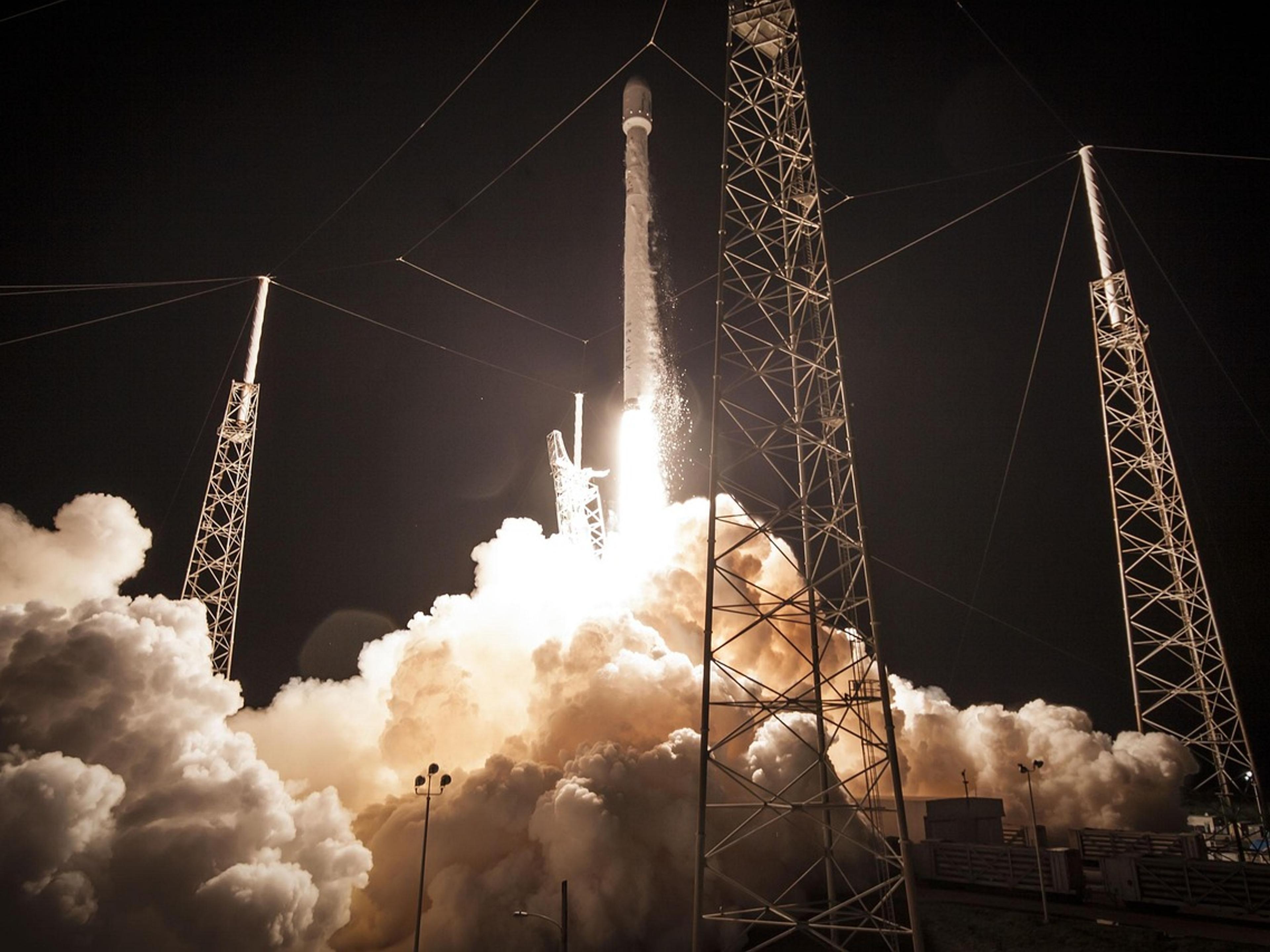
South Korea's homegrown Nuri rocket places 14 satellites in orbit on its fifth launch
South Korea's Nuri rocket, built entirely with domestic technology, delivered all five of its main satellites and nine of ten small CubeSats to orbit on 7 October, its fourth success in a row.
An MIT class project became an FDA-cleared wristband that eases essential tremor
A vibrating wristband that started as a student project in MIT's product-design class has been cleared by the FDA to help adults with essential tremor, after trials in which most patients improved.

AI tool gives teachers in India ready-made lesson plans in their own language
Shiksha Copilot, an AI system from Microsoft Research India evaluated with Cornell, saved more than 1,000 teachers in Karnataka about two hours a week, and about 30,000 teachers in Telangana now use it.