India approves ₹1.86 trillion plan for state power lines and 50 GWh of battery storage
India's cabinet approved the third phase of its Green Energy Corridor: new state-level transmission lines to carry up to 135 GW of renewable power, plus 50 GWh of battery storage, by the 2032-33 financial year.
By Diego Callegari, Editor
· India · 2 min read
Source: Prime Minister's Office, Government of India ↗
India's Union Cabinet approved a ₹1.86 trillion program on 30 September to build state-level power lines for up to 135 gigawatts of renewable energy and to install 50 gigawatt-hours of battery storage, according to the government's announcement of the decision. The scheme, called Green Energy Corridor Phase III, is due to be completed by the 2032-33 financial year.
Of the total outlay of ₹1,86,405 crore, about ₹1.36 trillion goes to transmission inside states and union territories and ₹500 billion to the batteries. The central government will contribute ₹540.8 billion, which the cabinet said will offset intra-state transmission charges and keep power costs down for consumers.
Solar farms are being built faster than the lines that carry their power
India's clean power capacity has grown quickly. Non-fossil sources passed 300 GW at the end of July, more than 54% of the country's roughly 552 GW of installed capacity, IANS reported, citing the Ministry of New and Renewable Energy. Solar alone reached about 165 GW, up from 2.8 GW in 2014. In the 2025-26 financial year the country added a record 55.29 GW of non-fossil capacity.
That power has to travel from sunny and windy districts to cities, and state grids have not always kept up. The cabinet said the new lines and batteries are meant to deal with intermittency, congestion and peak-hour curtailment, the practice of switching off solar or wind output the grid cannot absorb.
The third phase is far larger than the first two combined
Phase I of the program was designed for about 24 GW of renewables in eight states at a cost of ₹10,141.68 crore, and Phase II, approved in January 2022, for about 20 GW in seven states at ₹12,031.33 crore, pv magazine reported at the time of the second approval.
Together, the first two phases cost about ₹222 billion for roughly 44 GW. Phase III is more than eight times as expensive and is meant to handle about three times as much renewable capacity. It is also the first phase to include battery storage.
Batteries will sit next to solar and wind farms
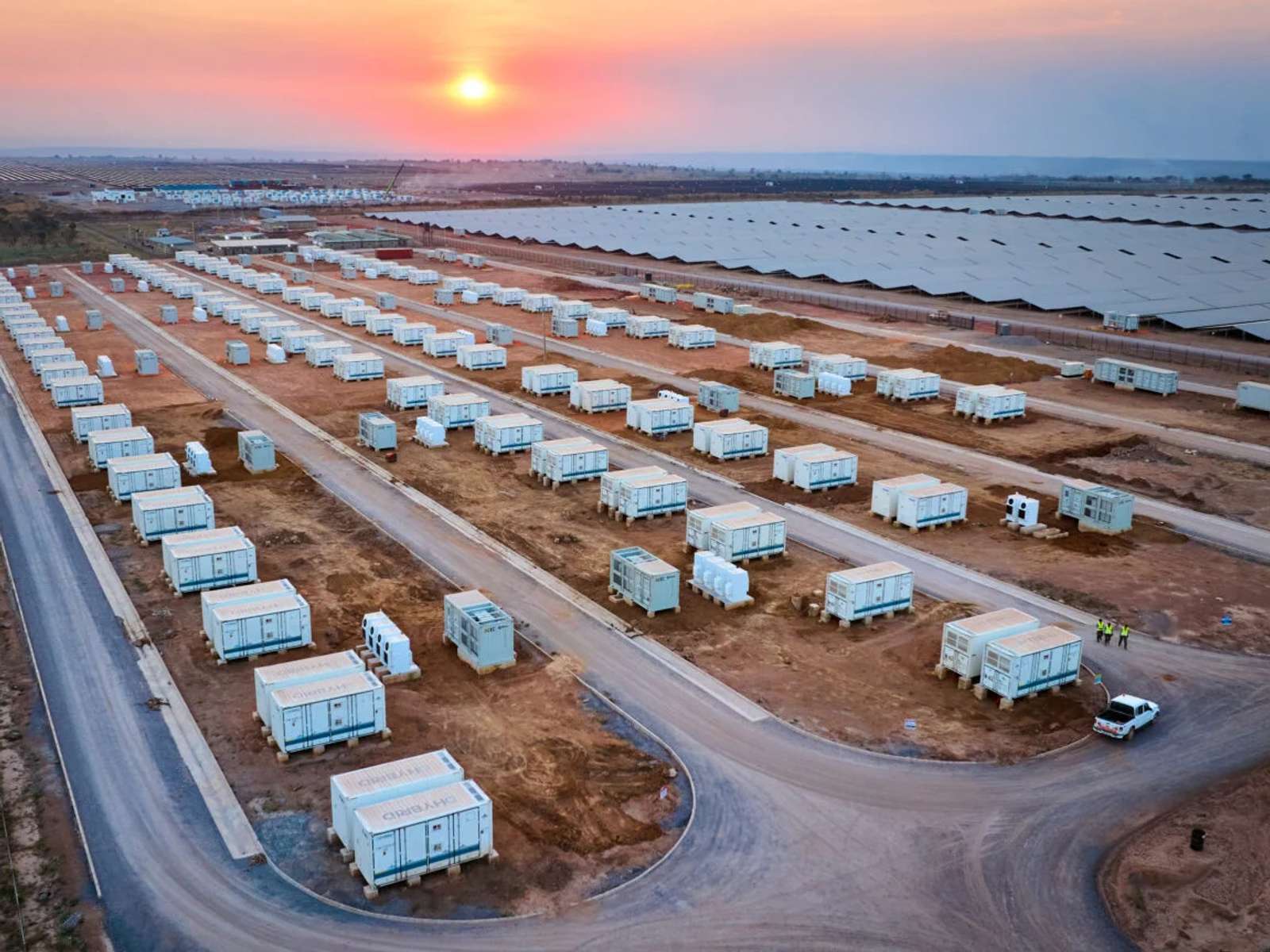
The 50 GWh of storage can be placed at renewable energy developers' sites or at other points important for grid flexibility, according to the cabinet. Stored solar power can then help meet what the cabinet called "non-solar hour demand" in the evening and at night. For scale, the private developer ACME Solar recently commissioned 437 megawatt-hours of battery storage at two sites in Rajasthan; the national scheme is more than 100 times that size.
New transmission projects will be tendered through tariff-based competitive bidding, while upgrades of existing networks will be paid on a cost-plus basis. State transmission utilities will run the program, and private transmission companies can bid to build, own, operate and maintain lines.
The government links the scheme to its target of 900 GW of installed non-fossil capacity by 2035, and expects jobs in construction, manufacturing and grid operation. The decision approves funding; individual lines and battery projects still have to be tendered, and the announcement does not list how the money will be split among states.
Sources
How we choose and verify sources: editorial policy.