Syria's fifth-century Church of Saint Simeon reopens to visitors after years of war damage
The Byzantine pilgrimage complex of Saint Simeon the Stylite near Aleppo reopened to visitors on 28 September after restoration and safety work, Syria's state news agency reported. Its column has been put back in place.
The Church of Saint Simeon the Stylite, a fifth-century Byzantine pilgrimage complex in the countryside northwest of Aleppo, reopened to visitors on Monday, 28 September, after restoration and safety work, Syria's state news agency SANA reported. The reopening was timed to World Tourism Day.
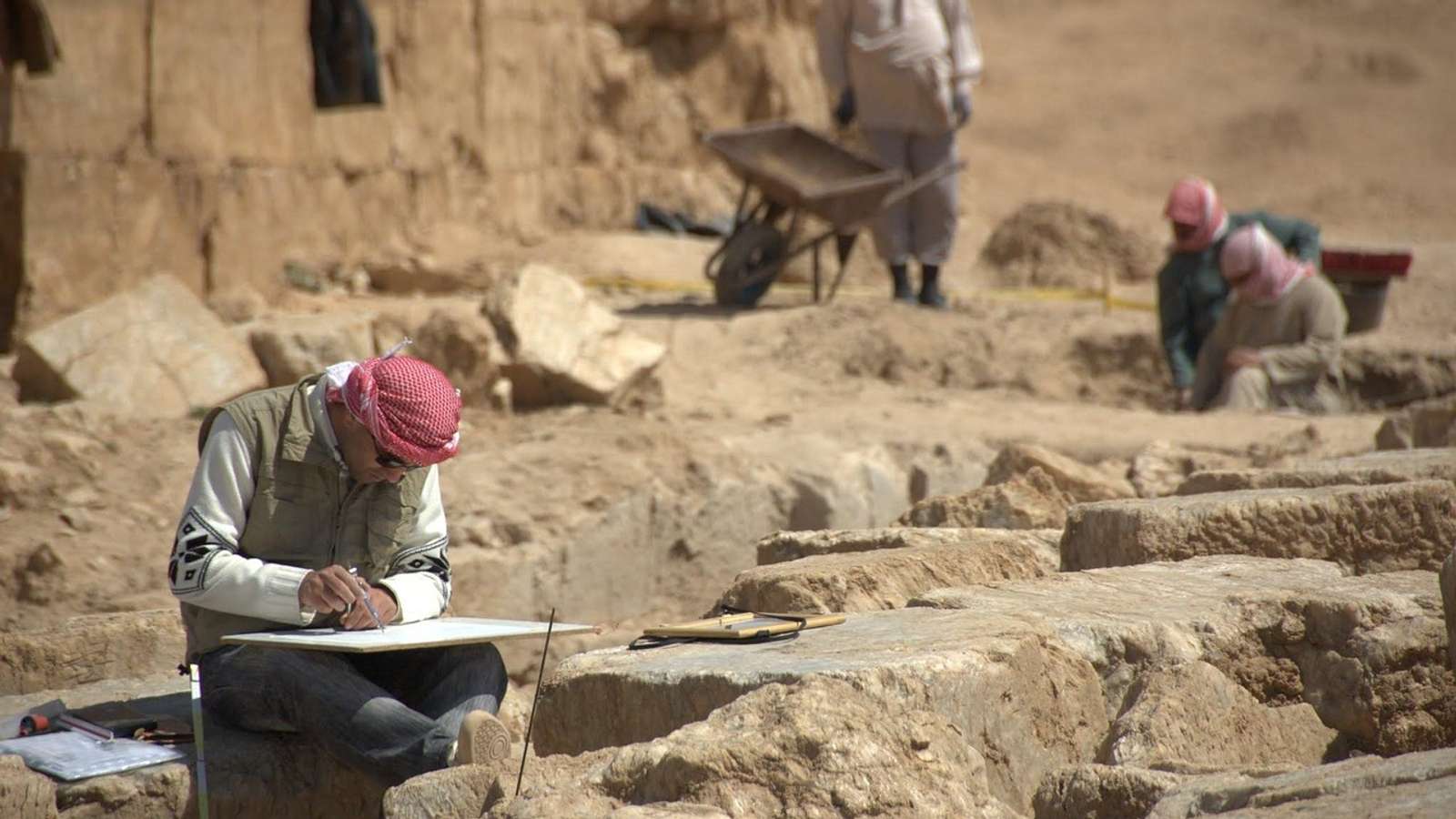
Workers cleaned and landscaped the site, repaired visitor routes and facilities, and reinforced structures considered at risk. Mulham Oqeidi, a member of the Aleppo Governorate Executive Office, told SANA the work also returned the Column of St. Simeon to its place and rehabilitated the main square.
A church built around a hermit's pillar
Simeon was an ascetic who lived on top of a column. The church was built between 476 and 490 AD under the Byzantine emperor Zeno, in the shape of a cross centered on that column, according to an earlier SANA profile of the site. A baptistery and quarters for monks followed. The complex lies about 40 km northwest of Aleppo city, near the town of Darat Izza.
Byzantine forces later fortified the church, which is why it is still known as Qalaat Semaan, the citadel of Simeon. It changed hands again in 986 and 1017 before falling out of use. Amal Hussein, an official responsible for World Heritage sites in Idlib province, told SANA it became an important destination for Christian pilgrims in the region.
The church belongs to the Ancient Villages of Northern Syria, about 40 villages grouped in eight parks that UNESCO added to the World Heritage List in 2011. The villages date from the first to the seventh centuries and were abandoned between the eighth and 10th centuries.
An air strike in 2016 and shelling in 2019 damaged the column
During the war the site became hard to reach. In May 2016, UNESCO's then Director-General Irina Bokova condemned severe damage to the church, possibly caused by an air strike on 12 May that year, including damage to the remains of the pillar on which Simeon is said to have spent 40 years.
The Aleppo Directorate of Antiquities told SANA in February that shelling in 2019 hit parts of the complex, including the area around the column, and that its remaining fragments were lost. The column was returned to its place in August in a joint effort by the governorate, the Directorate of Antiquities and Museums and the Council of Heads of Christian Denominations in Aleppo, the regional outlet Syriac Press reported.
Reopening dates differ between reports
SANA dates the reopening to 28 September. A report by the British news agency SWNS, republished in early October, said Syria's Directorate-General of Antiquities and Museums held a reopening ceremony on 2 October, after 14 years of closure. Good News Daily could not find that ceremony in Syrian official sources, so we cannot confirm whether a second, formal event took place. Heritage is being restored in other ways as well; in New York, the Metropolitan Museum returned looted Greek artifacts.
According to SANA, the restoration involved the governorate, antiquities authorities, representatives of Christian communities, emergency officials, a development organization, volunteers and archaeology students from Aleppo University. Rakan al-Tayeh, director of the General Authority for Tourism and Hotel Training at the Tourism Ministry, said the reopening is part of an effort to revive tourism in Aleppo province. A new website with virtual-reality features lets people outside Syria explore the complex.
Sources
How we choose and verify sources: editorial policy.